
Show summary Hide summary
- How cells sense ten times deeper than expected
- Collective force: when many cells sense as one
- New insights into cancer metastasis and escape routes
- Targeting depth sensing: a future therapeutic lever
- What this means for broader biological research
- How far can cells sense beyond their attachment surface?
- Why does long-range sensing matter for cancer metastasis?
- What is depth mechano-sensing in simple terms?
- Can therapies realistically target this sensing ability?
- How does this research connect with other cellular discoveries?
A cancer cell “feeling” its way through tissue long before it arrives there sounds like science fiction. New data now shows cooperating cells can push signal detection far beyond what anyone expected, rewriting how metastasis is understood — and how it might be stopped.
How cells sense ten times deeper than expected
Imagine a migrating tumor cell acting like the princess in the fairy tale, detecting a pea under many mattresses. In biological terms, that “pea” is a change in stiffness buried inside the tissue, and the mattresses are layers of collagen and extracellular matrix.
Work led by engineer Amit Pathak at Washington University in St. Louis shows that epithelial cells can extend their sensitivity about ten times beyond previous limits. Earlier research suggested a single abnormal cell sensed only around 10 microns beyond its attachment zone. Now, grouped epithelial cells reach roughly 100 microns into the matrix, a distance comparable to several cell diameters.
Scientists Develop ‘Cancer Flashlight’ to Illuminate Tumors for Enhanced Detection
MIT Researchers Identify Gut Protein That Captures and Eliminates Harmful Bacteria
Depth mechano-sensing: when tissue stiffness becomes a map
This phenomenon, called depth mechano-sensing, converts mechanical cues into decisions about movement. Cells pull on fibrous collagen around them, deforming it like climbers testing a rope before the next move. That mechanical tug sends information back into the cell’s internal machinery.
For highly polarized, migration-ready cells, this means they can “read” whether the next layer is soft connective tissue, dense tumor material, or even nearby bone. That reading acts like a GPS for cell signaling, guiding which direction offers the easiest route and which region should be avoided.
Collective force: when many cells sense as one
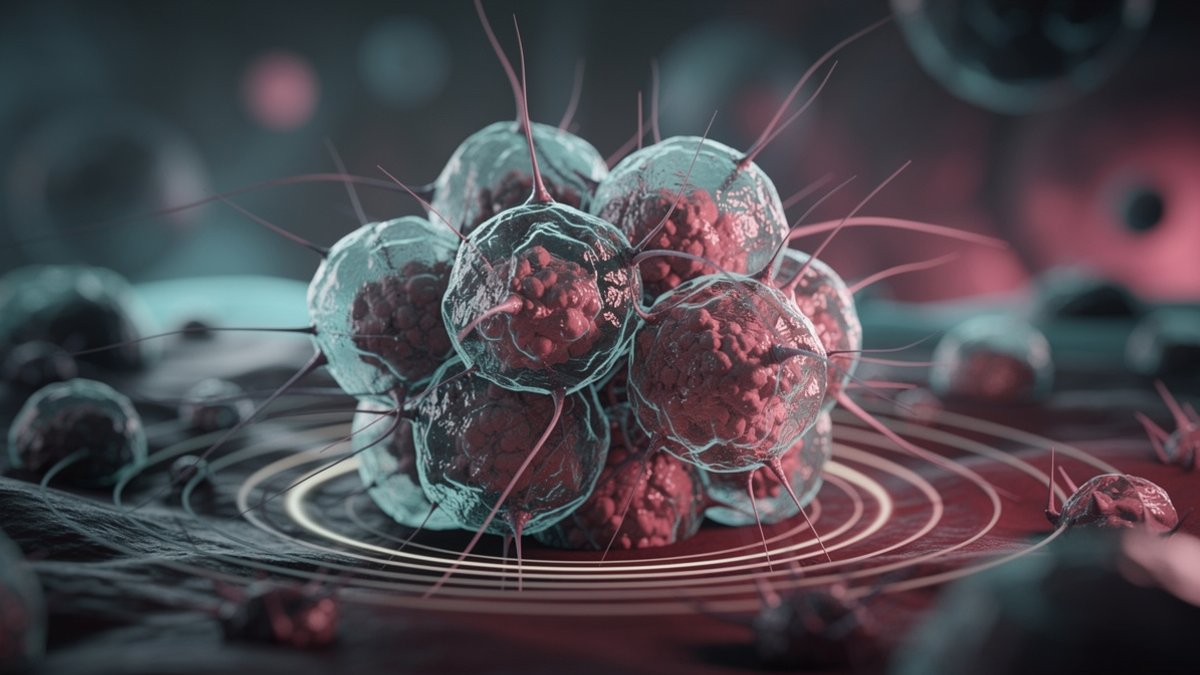
Pathak’s team uncovered a decisive twist: a sheet of epithelial cells behaves differently from one isolated cell. As they cluster, traction forces sum up, and the tissue layer starts behaving like a single, more powerful sensor pushing deeper into the collagen network.
Where a lone cell deforms nearby fibers, a coordinated group can restructure an entire local patch of extracellular matrix. This collective push explains how they manage signal detection from layers nearly 100 microns away, far beyond previous limits measured in single-cell experiments.
Two-step migration strategy revealed by computer models
Computer simulations from the group describe the process in two phases. First, as cells pack together, mechanical forces ramp up and begin remodeling the matrix vertically and laterally. Next, once enough information about stiffness is gathered, the front edge of the group adopts a clearly directed migration pattern.
For a researcher like Lina, an oncologist tracking early tumor spread, this offers a powerful lens. Instead of seeing a flat cell layer, she can treat it as a dynamic sensor array, constantly updating its map of the nearby tissue and selecting escape routes from the primary tumor.
New insights into cancer metastasis and escape routes
These advances reshape how cancer spread is interpreted. A cluster of malignant epithelial cells leaving a primary tumor can probe its surroundings long before physical contact with blood vessels or lymphatics. They use mechanical cues as a preview of what lies ahead.
That early information helps them navigate soft tissue, avoid rigid barriers, and head toward structures that support invasion. In this light, metastasis is not just random detachment but a mechanically guided journey powered by refined cell signaling between cytoskeleton, nucleus, and extracellular matrix.
Why increased sensitivity gives tumor cells an edge
Abnormal cells with high front–rear polarity particularly benefit from this system. Their internal architecture favors directed movement, and enhanced sensing lets them react quickly to subtle changes in stiffness or fiber orientation. Even in low-density or soft environments, they can still locate favorable paths.
Similar mechanistic thinking underpins other breakthroughs such as reprogramming tumor-associated immune cells into active defenders. By pairing immune rewiring with strategies targeting mechanical sensing, future therapies might corner metastasizing cells from multiple angles.
Targeting depth sensing: a future therapeutic lever
Researchers now focus on what controls how far a cell can feel. Candidate regulators include cytoskeletal proteins, adhesion complexes, and enzymes that remodel collagen. If pharmacological agents can tune these levers, depth sensing could be dialed down without shutting down normal tissue repair.
One scenario would involve drugs that soften the traction forces cells exert on collagen, shrinking their sensing radius. Another approach might block signaling pathways that translate mechanical inputs into migration orders, much like research decoding unseen metabolic processes in the nucleus, as described in recent metabolic studies.
What this means for broader biological research
Beyond oncology, this work feeds into a larger movement in biological research examining how physical forces shape development, inflammation, and aging. Funding from the NIH and the National Science Foundation continues to push these boundary zones between mechanics and biology.
Projects mapping millions of cells across organs or decoding how tissues react to exercise are now incorporating mechanical context as a key variable. The same principles that guide a tumor cluster may also help bone, kidney, or immune tissues adapt to stress and repair damage more efficiently.
- Key takeaway 1: Groups of epithelial cells sense tissue stiffness up to ten times deeper than single cells.
- Key takeaway 2: Depth mechano-sensing relies on active collagen deformation and collective force generation.
- Key takeaway 3: Enhanced sensitivity offers migrating cancer cells a roadmap for early metastasis.
- Key takeaway 4: Targeting mechanical sensing pathways may complement next-generation anti-cancer therapies.
How far can cells sense beyond their attachment surface?
Earlier work suggested many migrating cells could probe roughly 10 microns beyond their attachment site. New experiments with epithelial cell groups now show a sensing range approaching 100 microns. This tenfold increase arises when cells act collectively, generating stronger traction forces on collagen and extending their mechanical reach through the extracellular matrix.
Why does long-range sensing matter for cancer metastasis?
Long-range depth sensing lets cancer cells gather information about tissue stiffness and structure before they physically arrive there. This preview helps them choose favorable paths, avoid rigid barriers, and steer toward blood vessels or softer tissue that facilitates invasion. The process turns metastasis into a guided journey rather than a purely random escape from the primary tumor.
What is depth mechano-sensing in simple terms?
Depth mechano-sensing is the ability of a cell to pull on its surroundings, feel how the material deforms, and use that feedback to detect features buried below the surface. The cell converts those mechanical signals into internal biochemical responses that adjust its movement, shape, and gene expression, effectively turning stiffness into information.
Can therapies realistically target this sensing ability?
Scientists Uncover the Unexpected Truth About How Human Hair Actually Grows, Challenging Textbook Beliefs
How Serotonin-Producing Gut Bacteria Could Unlock New Treatments for IBS
Therapies could aim at proteins that generate traction forces, molecules that remodel collagen, or signaling pathways that translate mechanical cues into migration decisions. By reducing a tumor cell’s sensing radius or blurring the mechanical information it receives, drugs may slow or misdirect metastatic spread while still preserving core functions in healthy tissues.
How does this research connect with other cellular discoveries?
Long-range sensing fits into a broader picture where mechanics, metabolism, and signaling intersect. Studies on immune cell reprogramming, nuclear metabolism, and organ-wide cell mapping all highlight how cells continuously integrate physical and chemical signals. Together, they are building a more complete view of how tissues adapt, fail, or become malignant over time.