
Show summary Hide summary
- HUD fair housing probe: why Minneapolis matters now
- How the Minneapolis 2040 plan and cultural districts work
- Inside HUD’s investigation and who is at the table
- Costs, timelines and what city residents could feel day to day
- Future of fair housing policy after the Minneapolis case
- Balancing equity and law in future cities
- What is the HUD fair housing probe in Minneapolis about?
- Does the investigation mean Minneapolis is guilty of housing discrimination?
- How could this affect affordable housing for residents?
- What role do cultural districts play in the Minneapolis 2040 plan?
- Why is the disparate impact rule important in this context?
A family scrolling rental listings on a phone in South Minneapolis suddenly sees the same message again and again: “Waitlisted – priority criteria apply.” Behind those few words lies a fierce national debate about Fair Housing, race, and who gets a real shot at a home.
That debate has now turned into a formal HUD Probe into Minneapolis, a city of about 425,000 residents that has often been praised for progressive planning, including its headline-grabbing Minneapolis 2040 plan. The U.S. Department of Housing and Urban Development’s Office of Fair Housing and Equal Opportunity has opened an Investigation into whether the city’s housing policies violate the Fair Housing Act and Title VI of the Civil Rights Act.
HUD fair housing probe: why Minneapolis matters now
The federal letter sent on January 15 to city leaders landed in a tense local climate. Recent immigration raids, protests after an Immigration and Customs Enforcement agent killed Renée Good, and heated debates over Somali-led childcare fraud allegations have already stretched trust between communities and the federal government.
Satellites Reveal Hidden Flaws in Bridges Across America and Beyond
New Study Reveals AI Enthusiasm Amidst Poor Preparation
Against that backdrop, Assistant Secretary Craig Trainor wrote that the Frey administration “may be engaging in unlawful discrimination” by prioritizing residents for housing based on race or national origin rather than individual need. According to coverage of the HUD housing discrimination investigation, the focus is not on one project, but on a network of policies, funding priorities, and planning goals.
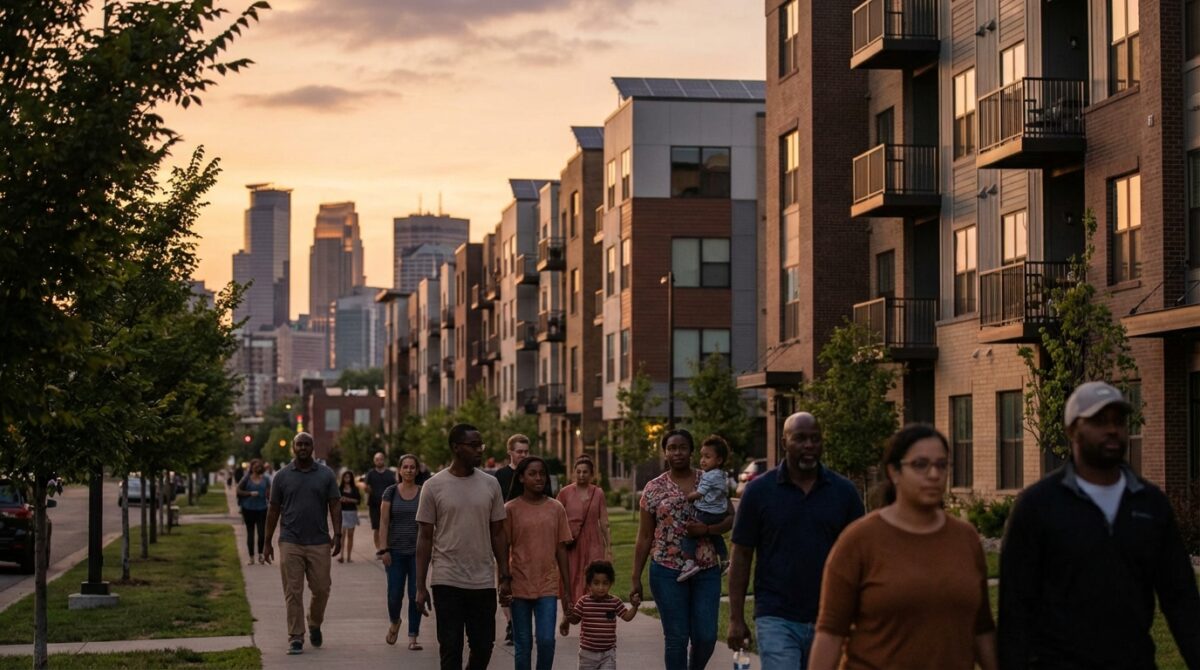
Race, fraud allegations and the politics of housing equality
Fair Housing
City leaders reject the framing. A spokesperson responded that Minneapolis has “award-winning Affordable Housing programs” and argued that the Investigation appears to be driven by politics rather than by concern for low-income renters. For residents, especially Black, Indigenous, immigrant, and low-income white households, the outcome could determine whether targeted support remains possible or is dismantled as discriminatory.
How the Minneapolis 2040 plan and cultural districts work
The Minneapolis 2040 plan, adopted before the current federal administration, aimed to undo decades of exclusionary zoning by allowing more density in single-family neighborhoods and expanding transit-oriented development. It also backed “cultural districts,” defined by the city as contiguous areas with strong cultural or linguistic identity and large populations of people of color, Indigenous residents, or immigrants.
Within these districts, city departments have steered grants, infrastructure upgrades, and sometimes rental licensing leverage toward projects serving historically marginalized communities. HUD’s letter highlights language from the Community Planning and Economic Development department that pledges to prioritize “rental housing for Black, Indigenous, People of Color and Immigrant communities.” For federal officials, that wording crosses the line from place-based investment to race-based preference.
From planning language to lived experience in housing discrimination
In practice, these policies can shape how a landlord renovates a triplex, which nonprofit gets funding for a 60-unit building, or how quickly code enforcement responds in a particular corridor. Residents like Ayaan, a Somali American single mother in Cedar-Riverside, may have benefited from targeted outreach and rental assistance that considered linguistic barriers and immigration histories.
The challenge is legal as well as moral. Under current Fair Housing standards, including the now-threatened disparate impact rule, governments must show that efforts to address Housing Discrimination do not disproportionately harm any protected group. The recent proposal from HUD to roll back that disparate impact standard, widely reported in outlets like NewsBreak’s coverage of the HUD fair housing investigation, raises the stakes of how Minneapolis defends its equity-focused language.
Inside HUD’s investigation and who is at the table
The HUD Office of Fair Housing and Equal Opportunity, led by Craig Trainor, is gathering documents, emails, policy guidelines, and data on who has received access to city-backed units and programs. The probe will likely involve interviews with city officials, nonprofit housing providers, and potentially tenants themselves.
Several stakeholders are directly or indirectly involved: the Frey administration, the Minneapolis City Council, community organizations in cultural districts, landlords, and federal civil rights lawyers. Reports like exclusive coverage of the civil rights probe describe a process that could stretch for months and end with negotiated changes, sanctions, or even a loss of federal funds.
Key elements under scrutiny for housing equality
Based on federal statements and legal experts, several policy components are likely to be examined for their impact on Equal Access:
- Priority criteria in city-backed rental programs that refer explicitly to race or national origin.
- Cultural district funding rules that might advantage one group of residents over others living nearby.
- Use of rental licensing authority to channel benefits toward specific demographic communities.
- Communication materials that could suggest some applicants are welcomed more than others.
None of these elements automatically prove a civil rights violation. The question is whether they produce unjustified disparate treatment, and whether race-neutral alternatives could achieve similar equity goals without running afoul of federal law.
Costs, timelines and what city residents could feel day to day
HUD investigations rarely come with a headline price tag, yet they can carry significant financial implications. Minneapolis receives millions of dollars annually in federal housing and community development funds that support vouchers, public housing repairs, and nonprofit-led projects.
If violations are found, the city could face funding conditions, mandated program redesigns, or in more severe cases, partial freezes. The experience of Boston, which faced a similar Fair Housing inquiry in late 2025 over alleged discrimination against white residents, suggests months of negotiation and staff time. Analysis such as the overview of the race-based housing plan investigation indicates that legal reviews and program rewrites can slow down new affordable developments.
Human impact: from waitlists to rental fees
For renters, the most immediate effects may show up in subtle changes. Application forms could be rewritten, outreach strategies rebalanced, and priority categories redefined. A household that once qualified for targeted assistance because of membership in a specific ethnic community may instead need to demonstrate income, disability status, or other race-neutral criteria.
At the same time, the national focus on housing fairness is also pressuring cities to remove other barriers, such as “junk fees” in rental applications. Policy discussions echoing ideas similar to efforts to scrap rental junk fees show that many urban residents experience inequality not just through race, but through the compounding cost of deposits, screening charges, and opaque add-ons.
Future of fair housing policy after the Minneapolis case
What happens in Minneapolis could influence how other cities design equity-focused housing programs. If HUD forces the removal of race-explicit language, planners from Seattle to Atlanta may pivot toward geographic, income-based, or neighborhood-displacement metrics to stay within federal lines while still tackling entrenched segregation.
Conservative commentators already argue, in pieces like critiques of Minneapolis housing policies and equality, that the probe is a necessary correction to what they see as reverse discrimination. Civil rights advocates counter that without explicit focus on communities harmed by redlining and exclusion, Housing Equality will remain aspirational rather than real.
Balancing equity and law in future cities
For residents, the core issue is simple: will the system feel fair when you apply for a home? A future where city governments must be race-blind in wording but race-aware in outcomes will demand more sophisticated metrics, careful community engagement, and stronger enforcement of existing anti-discrimination rules.
Sources such as the official HUD announcement on the Minneapolis probe and follow-up analyses like reports on alleged discriminatory housing plans point toward a new era of legal testing. The insight for city dwellers is clear: housing justice is not an abstract slogan, but a live negotiation between law, policy design, and the daily search for a stable address.
What is the HUD fair housing probe in Minneapolis about?
The HUD fair housing probe examines whether Minneapolis’ housing plans, practices and policies unlawfully favor or disadvantage residents based on race or national origin. Investigators are reviewing elements of the Minneapolis 2040 plan, cultural districts and rental program priorities to determine if they violate the Fair Housing Act and Title VI of the Civil Rights Act.
Does the investigation mean Minneapolis is guilty of housing discrimination?
No. An investigation signals that HUD has concerns and wants evidence, not that it has already proven housing discrimination. The process may end with no findings, negotiated program changes, or more serious consequences if officials conclude that policies deny equal access to housing without sufficient legal justification.
How could this affect affordable housing for residents?
Depending on the outcome, the city might have to revise eligibility rules, change how it funds projects or adjust cultural district programs. Some targeted supports for specific communities could shift toward race-neutral criteria like income, disability or neighborhood displacement risk, which may alter who receives help first from limited affordable housing resources.
What role do cultural districts play in the Minneapolis 2040 plan?
How One City Boosted Bus Speeds by 20% with AI
Kansas City Missouri Leads with New Data Center Ordinance
Cultural districts are areas with strong cultural or linguistic identity and significant populations of people of color, Indigenous residents or immigrants. The city uses them to guide investments and housing support. HUD is assessing whether policies tied to these districts inadvertently or explicitly prioritize certain racial or ethnic groups in ways that conflict with federal fair housing law.
Why is the disparate impact rule important in this context?
The disparate impact rule allows civil rights enforcement when a housing policy harms protected groups more than others, even without explicit discriminatory intent. HUD’s recent proposal to roll it back could narrow the tools available to challenge harmful policies, and it shapes how both federal officials and cities like Minneapolis evaluate whether equity-focused programs comply with fair housing requirements.