
Show summary Hide summary
- How San José turned red lights into allies for buses
- From pilot project to 24 routes of speed improvement
- What AI-prioritized buses feel like for riders
- The glitches: buses that arrive too early
- Scaling the model to other cities and regions
- Beyond buses: AI for safer, more responsive streets
- How much faster did San José buses become?
- Does bus priority at signals slow down car traffic?
- What technology is required for AI transit signal priority?
- Who funds projects like San José’s bus speed upgrade?
- Can smaller cities replicate San José’s transportation strategy?
When a parent in San José leaves work at 5:30 p.m., the difference between a 40-minute bus ride and a 30-minute one decides whether they read a bedtime story or miss it. A quiet shift in traffic management just turned that story in their favor. Tactics for Transforming Transit in Two Years describe similar strategies.
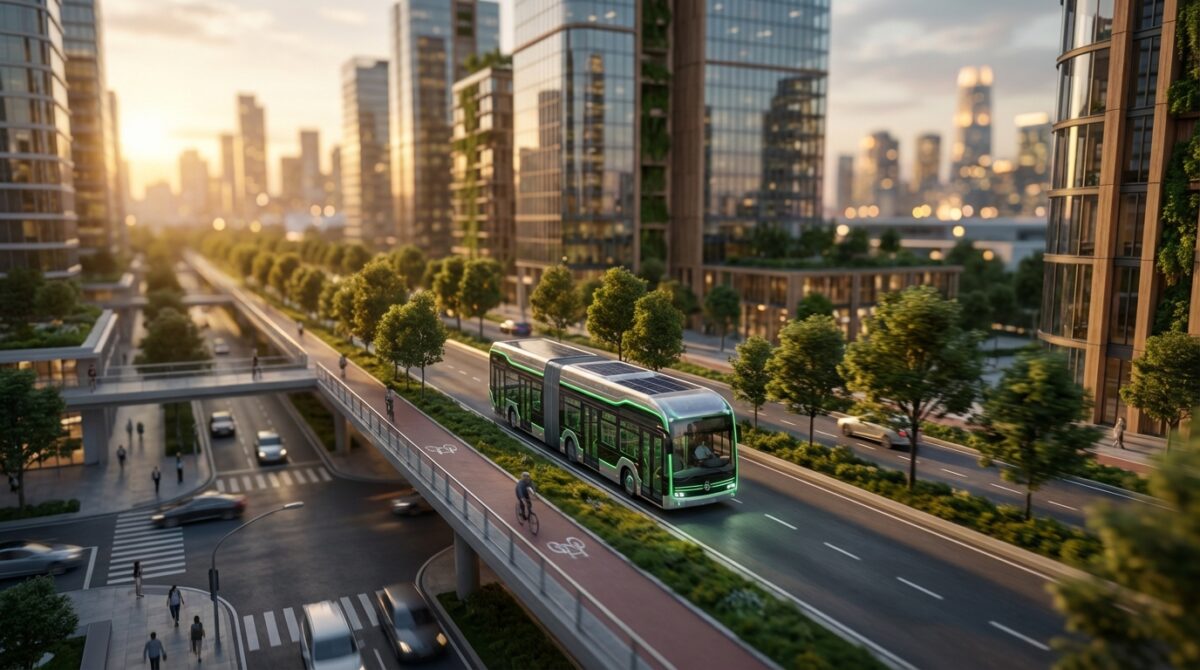
San José, a city of more than a million residents in Silicon Valley, has managed to boost transit bus speeds by roughly 20% across 24 routes. Instead of widening roads or buying dozens of new vehicles, the city reprogrammed something invisible but powerful: how traffic lights respond to buses.
How San José turned red lights into allies for buses
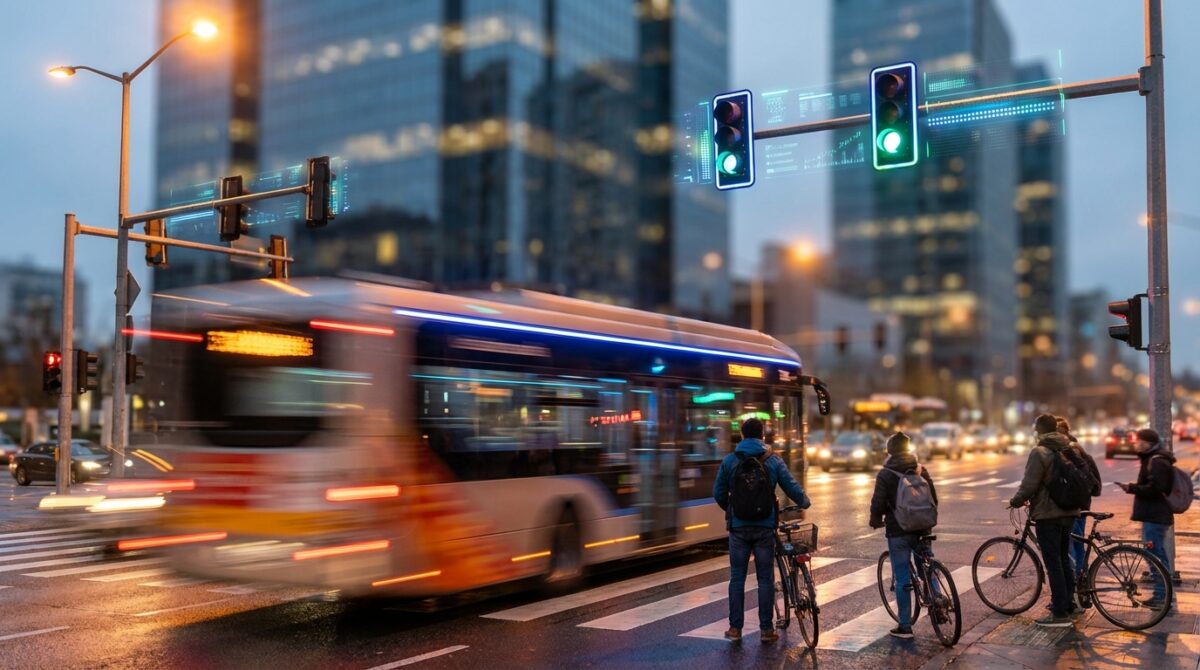
At the heart of this transportation strategy lies a simple idea: when a crowded bus approaches an intersection, it should not be treated like a single car. San José rolled out AI-powered bus priority at signals so buses spend less time staring at red lights and more time moving.
Kansas City Missouri Leads with New Data Center Ordinance
NYC Pledges $1 Billion to Expand Automated Traffic Safety Enforcement Program
The system builds on a concept used in a few European and North American cities, but pushes it further with machine learning and connected vehicles. While Copenhagen leans on cycling culture and Bogotá relies on bus rapid transit lanes, San José shows how existing streets can be tuned to support public transportation without massive construction budgets.
Inside the AI transit signal prioritization system
San José’s approach relies on three building blocks working together in real time. Each bus carries a transponder that continuously sends its position and schedule data. At the same moment, intersections feed live traffic information into a central platform.
The city partnered with traffic software company Lyt, which uses machine learning to decide when to extend a green phase or shorten a red one. The bus does not always “win,” but when it is crowded or behind schedule, the algorithm nudges the signal plan so that commute efficiency improves without throwing cars and cyclists into chaos.
From pilot project to 24 routes of speed improvement
The story began modestly in 2023 with just two routes. On those corridors, red-light wait times for buses dropped by about half, and drivers noticed they were hitting fewer “every light is against me” runs. That pilot gave city planners political and technical confidence to scale up.
Once the results were validated, the city extended AI transit signal prioritization across every transit bus line operated by the Valley Transportation Authority. For riders, the impact shows up in missed connections avoided, tighter schedules and fewer awkward texts about being late to pick up children or start evening shifts.
Who paid, who built, who benefits
Behind the scenes, several players aligned. City officials led the planning, the Valley Transportation Authority supplied buses and operations, and Lyt delivered the software platform. State and federal programs paid close to 90% of the costs, allowing the local government to experiment without overwhelming its budget.
For residents who rely on buses as a daily lifeline, the benefits are concrete: shorter trips, fewer missed medical appointments and more predictable arrival times. As one San José planner described privately, this is about showing that local government can deliver results where it matters—on the street, at the stop, in people’s evenings.
What AI-prioritized buses feel like for riders
Consider Maya, a nurse commuting on one of the 24 upgraded routes. Before the rollout, she regularly built in a 15-minute buffer, knowing that three unlucky red lights could derail her shift change. Now, those same buses glide through more intersections without stopping.
For someone like Maya, that 20% speed improvement does not sound like an abstract statistic. It means eating breakfast rather than skipping it, arriving at work calmer and having the energy to stop by a grocery store on the way home. Small shifts in urban mobility technology, multiplied by thousands of riders every day, reshape the texture of city life.
Impacts on car drivers, cyclists and pedestrians
Any time a city gives priority to buses, a question appears: do car drivers lose? In San José’s case, the AI aims to keep the whole system flowing. By moving large numbers of passengers through intersections more quickly, congestion can ease rather than worsen.
Signals still cycle for bikes and pedestrians, but now more people on buses clear junctions with less stop-and-go. Over time, if faster trips draw residents out of private cars and into public transportation, even drivers who never board a bus can feel the difference in smoother traffic.
The glitches: buses that arrive too early
No system shifts a big city without producing a few surprises. In San José, the main complaint so far is almost paradoxical: buses on some routes started arriving ahead of schedule because they faced fewer red lights than expected.
That might sound like a luxurious problem, but riders who time their walk to the stop do not appreciate watching a bus pull away a minute early. To fix this, planners are looking at schedule updates and controlled dwell times at key stops so that faster infrastructure does not undermine reliability.
Equity questions and who gets priority first
Another tension sits under the surface: which lines receive the smartest tech first? If more affluent districts see upgrades before low-income neighborhoods, the promise of fairer city planning falls flat. San José’s rollout across all transit routes helps limit this risk, but ongoing monitoring still matters.
Some advocates argue that similar AI tools should be deployed first where residents depend most on buses and have the fewest alternatives. That debate is already visible in research on scientists unveil hidden mobility policies, which stresses how innovation must avoid deepening historic inequalities.
Scaling the model to other cities and regions
Could a midsize city in the Midwest or a sprawling metro like Houston copy this approach? The hardware requirements—bus transponders and connected signals—are not exotic. Many intersections already have the foundations thanks to previous ITS investments.
The bigger hurdles often sit in coordination and trust. Traffic engineers, transit agencies and elected officials must align around a shared priority: move buses quickly because they carry many people, not because it looks futuristic. Case studies in urban transport innovation suggest that cities with strong inter-agency cooperation move faster on these projects.
Beyond buses: AI for safer, more responsive streets
San José is not stopping at buses. The city has also been testing AI tools that scan for potholes, debris and malfunctioning traffic lights, turning vehicles and cameras into a rolling inspection team. Another pilot uses vision sensors to detect pedestrians at night and alert drivers through smarter signaling.
For residents, this points to a future where the street network quietly watches for hazards, smooths journeys and protects people crossing after dark. If done transparently and with strong privacy rules, AI can help make urban mobility not only faster but also safer and more humane.
- Riders gain time, predictability and less stress during daily trips.
- Drivers see fewer stop-and-go waves as buses clear intersections efficiently.
- City staff get data to fine-tune corridors instead of relying on guesswork.
- Low-income communities can access jobs and services with shorter journeys.
- Climate goals become more reachable as faster buses attract new users.
How much faster did San José buses become?
Across 24 routes, San José reports around a 20% increase in transit bus speeds after deploying AI-powered transit signal priority. During the initial pilot on two lines, red-light waiting times for buses dropped by about half, which translated into more reliable and shorter trips for riders.
Does bus priority at signals slow down car traffic?
The system is designed to balance movements for all users. By prioritizing full buses at key moments, the AI platform often reduces overall congestion because more people move through intersections in fewer vehicles. Some individual drivers may wait slightly longer at times, but the network as a whole can flow more smoothly.
What technology is required for AI transit signal priority?
Each bus needs a transponder or connected vehicle device that shares its position and schedule information. Traffic signals require communication capability and central software that can adjust light phases in real time using algorithms. San José partnered with Lyt for this software layer, combining connected vehicles, live traffic data and machine learning.
Who funds projects like San José’s bus speed upgrade?
In San José’s case, state and federal programs covered about 90% of project costs, easing the burden on the city budget. Many regions tap transportation grants, climate funds or innovation programs to support similar improvements, since faster public transportation usually aligns with emission reduction and equity goals.
Can smaller cities replicate San José’s transportation strategy?
Are Drivers Ready to Embrace Speed-Limiting Technologies?
Uber CEO Unveils Strategic Vision for Autonomous Vehicle Development
Yes, smaller or less tech-focused cities can adapt the same principles. The key steps are equipping buses and signals, choosing a compatible software provider, and coordinating between transit agencies and traffic departments. Starting with one or two corridors and expanding after measurable results often works better than citywide deployment from day one.