Show summary Hide summary
- The Lithium Surge transforming Cornwall’s abandoned quarry
- Cornwall’s hidden wealth of lithium beneath the granite
- Geothermal lithium and low-impact extraction beneath Cornwall
- Mining revival, local livelihoods and renewable energy security
- What comes next for Cornwall’s lithium and your climate choices
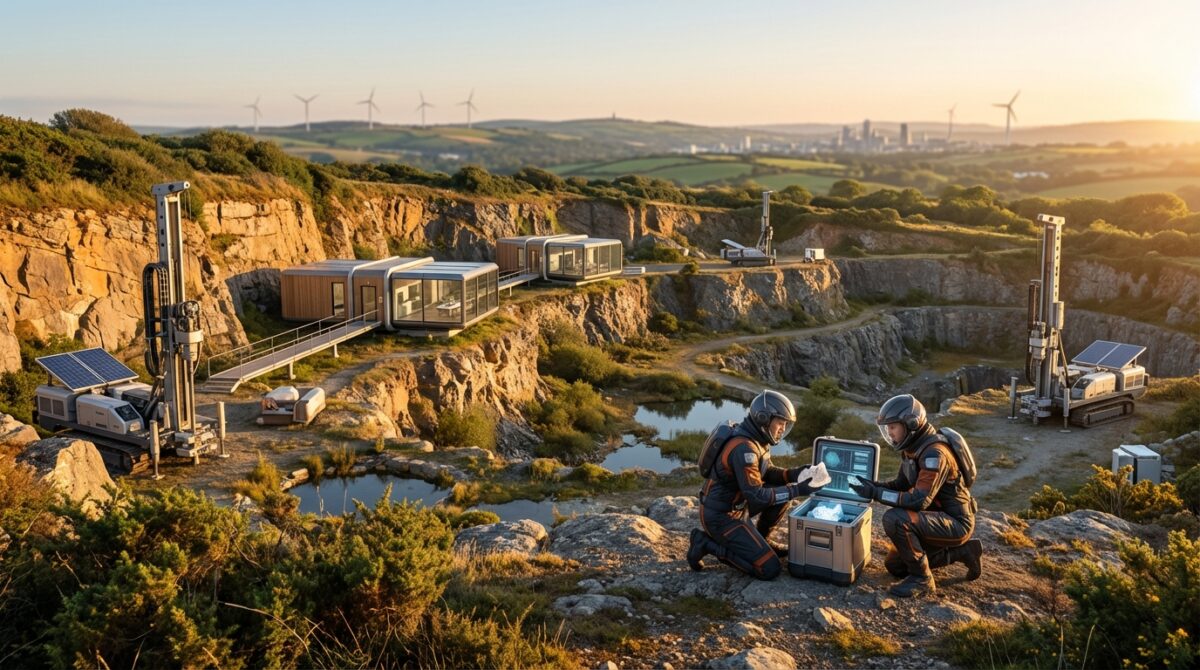
An abandoned quarry above St Austell looks like a wound in the Cornish landscape. Yet inside this dusty bowl of granite, engineers talk about powering electric vehicles, cutting UK imports and reviving a county where some villages now have just one pub and one shop.
That contrast – desolate pit versus low‑carbon future – captures the Lithium Surge now sweeping through mid-Cornwall. The question is no longer whether lithium lies under the “granite kingdom”, but whether this hidden wealth can be unlocked without repeating the scars of past mining booms.
The Lithium Surge transforming Cornwall’s abandoned quarry
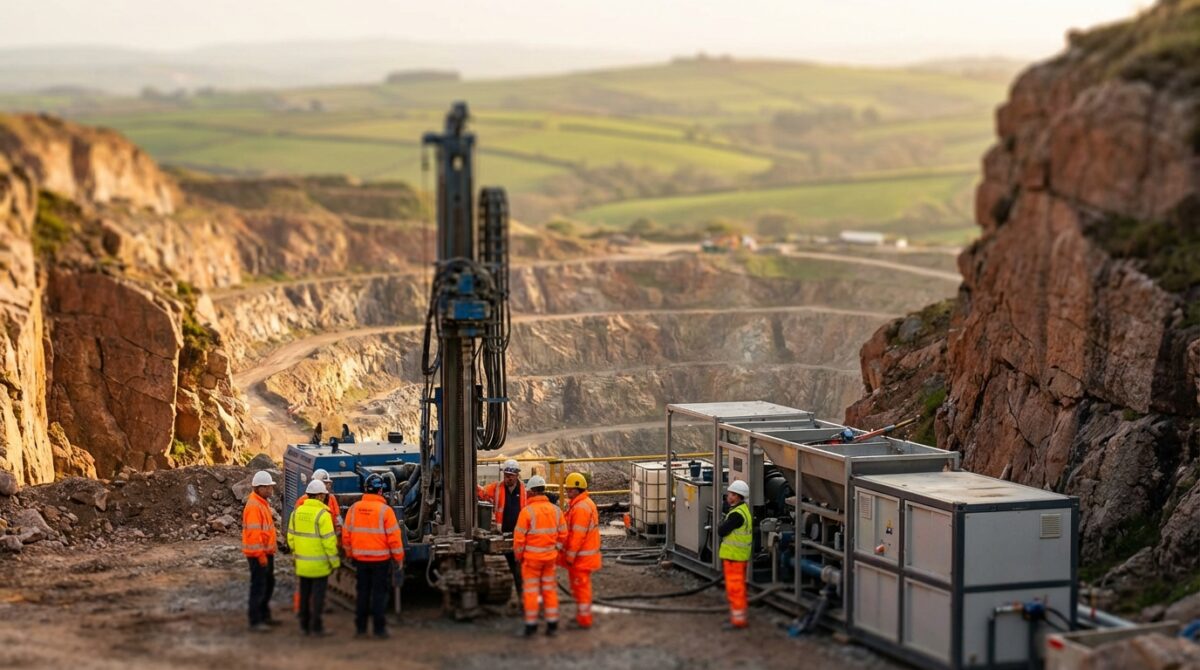
The Trelavour pit, first opened around a century ago for china clay, shut down roughly ten years ago. Today it anchors Cornish Lithium’s hard rock project, a test case for whether a single abandoned quarry can supply thousands of tonnes of battery materials and new year-round jobs by the end of this decade.
Innovative Catalyst Transforms Carbon Dioxide into Sustainable Clean Fuel
Electric Vehicles Drive into the Spotlight as Global Adoption Accelerates in Both Wealthy and Emerging Markets
Geologists from the University of Exeter’s Camborne School of Mines trace this story back 275–280 million years, when a continental collision melted the lower crust and forced huge bodies of granite upwards. As those granites cooled, thin sheets of shiny mica formed; some of those micas trapped lithium atoms. That ancient collision now shapes the UK’s modern renewable energy plans.
From white cliffs of clay to white gold for batteries
Lithium’s importance rests on a simple piece of chemistry: it is the lightest metal and has a high electrochemical potential, so it stores more energy per kilogram than rivals. A single premium EV battery can hold around 10–12 kg of lithium, and grid-scale storage systems require far more.
According to the International Energy Agency, global lithium demand for electric vehicles and stationary storage has multiplied more than sixfold since 2015. The UK currently imports almost all its refined lithium compounds, largely from supply chains dominated by China, Australia and the South American “lithium triangle” – a vulnerability that British policymakers no longer ignore.
Cornwall’s hidden wealth of lithium beneath the granite
Studies cited by the British Geological Survey and work published by researchers at Exeter indicate that Cornwall holds some of Europe’s most promising hard rock and geothermal lithium prospects. One industry estimate suggests that Cornish deposits could sustain extraction of around 40,000–50,000 tonnes of lithium chemicals annually for at least two decades.
Cornish Lithium’s own goal illustrates the scale: around 20,000 tonnes per year of battery-grade lithium hydroxide by 2030, roughly 20% of projected UK needs. That target echoes analysis in reports such as The Cornwall lithium revival, which frame these resources as a strategic pillar for the country’s clean energy transition.
How hard rock lithium extraction works at Trelavour
At Trelavour, crews blast and excavate the lithium-bearing granite that Victorian miners once ignored. Crushed rock rides a conveyor into a refurbished processing shed, where mills, scrubbers and separators concentrate the mica-rich fraction before chemical treatment turns it into lithium hydroxide, a fine white powder that will eventually feed battery factories.
The company highlights several ways this differs from controversial brine ponds in South America. Environmental permits restrict dust, noise and water use; the granite itself is relatively benign, with low risk of acid mine drainage. Some waste streams, such as silica or gypsum, may even find second lives in cement or plasterboard, trimming the overall footprint.
Geothermal lithium and low-impact extraction beneath Cornwall
A short drive from the quarry, at Cross Lanes and United Downs, a quieter revolution is underway. Here, deep boreholes tap hot, mineral-rich brines circulating through fractured rock up to two kilometres below the surface, an approach often called sustainable extraction because the water is returned underground after processing.
Core samples pulled from these depths resemble giant pencil leads, criss-crossed with fractures where brine flows naturally. Test wells have found significant lithium concentrations in water at 80–90°C. The next phase involves twin production and reinjection wells, allowing continuous circulation with minimal disturbance at the surface.
Heat, lithium and food: stacking climate solutions
The geothermal brine does more than carry lithium. Its heat could provide low-carbon warmth to nearby businesses or greenhouses, helping local growers extend tomato and cucumber seasons while cutting gas use. That coupling of heat, battery materials and regional food production turns a single project into a cluster of climate solutions.
Similar concepts are being trialled in countries like Germany and France, but Cross Lanes is on track to become the UK’s first commercial geothermal lithium facility. The approach answers a recurring public question: can the UK tap critical minerals without destroying landscapes that tourists and residents both treasure?
Mining revival, local livelihoods and renewable energy security
Cornish Lithium now employs just over 100 people, with plans to triple its workforce as Trelavour and Cross Lanes shift from demonstration to commercial scale later this decade. Mining economists often apply a multiplier of four, meaning each on-site role supports several others in engineering, logistics, catering and specialist services.
For villages hit by the long decline of tin, copper and china clay, that matters more than another seasonal surf shop. Local leaders quoted in reports such as Lithium and the dream of Cornwall’s mining revival describe a community eager to reconnect with its mining heritage, while insisting that twenty-first century projects share benefits more fairly than Victorian predecessors.
Balancing heritage, environment and the lithium boom
Not everyone is entirely reassured. Conservation groups watch dust, traffic and landscape impacts closely, especially where new pits might clash with cherished views or historic engine houses. Analyses like this research on mining and heritage in Cornwall highlight tensions between industrial renewal and cultural identity.
To maintain trust, operators will need to prove that promises translate into practice: low-carbon equipment, careful water management, progressive rehabilitation of worked-out pits and training pipelines for local young people. Transparent monitoring and clear community benefit schemes can turn a “new gold rush” narrative into a long-term partnership.
What comes next for Cornwall’s lithium and your climate choices
Timelines remain tight. Demonstration plants at both Trelavour and Cross Lanes still need to scale up, qualify their products with battery makers and navigate shifting prices, just as global gigafactories expand. Forecasts suggest UK mines could start meaningful output around 2028–2029, leaving imports to cover roughly half of demand for several years.
Yet every tonne of locally produced lithium hydroxide reduces exposure to supply shocks and helps align climate commitments with domestic jobs. For readers watching this story from afar, Cornwall’s experiment offers clues about how regions with old pits and quarries might plug into the low‑carbon economy.
- Choosing electric vehicles and public transport cuts the future demand for oil while increasing the value of responsibly sourced lithium.
- Supporting companies that publish clear climate and sourcing plans helps push the sector toward sustainable extraction standards.
- Backing local consultations and community projects around new mining sites can steer investment towards skills, nature recovery and long-term jobs.
- Staying informed through independent reporting on renewable energy supply chains keeps the debate grounded in data rather than hype.
Why does Cornwall matter for the UK lithium supply?
Cornwall sits on granite bodies enriched in lithium-bearing mica, giving it some of Europe’s most promising hard rock and geothermal resources. If projects like Trelavour and Cross Lanes scale as planned, they could supply around 20–50% of the UK’s future lithium needs, reducing reliance on imports from China, Australia and South America while supporting domestic jobs linked to electric vehicles and grid batteries.
How is lithium extracted from an abandoned quarry?
At sites like Trelavour, engineers reopen existing pits instead of digging new ones. They blast and crush the granite, concentrate the mica fraction and then use chemical processing to turn the lithium into compounds such as lithium hydroxide. Because the quarry already exists and the granite is relatively chemically stable, impacts focus on managing noise, dust, traffic and waste rock, with regulators requiring rehabilitation plans once mining ends.
Is geothermal lithium extraction more sustainable?
Geothermal projects pump hot, lithium-rich brine from deep fractures, strip out the lithium using selective filters or sorbents, then reinject the cooled water underground. This closed-loop design can have a smaller surface footprint than open pits, lower visual impact and the bonus of usable heat for nearby homes or greenhouses. The overall sustainability still depends on careful management of energy use, chemicals and seismic risk, but it offers a promising alternative to large evaporation ponds.
When could Cornish lithium reach electric vehicle batteries?
US Spurs Unprecedented Global Rise in Gas-Powered Energy Fueled by AI Growth, Amid Significant Climate Concerns
Innovative Breakthrough Transforms Exhaust CO2 into Valuable Materials
Demonstration plants in Cornwall are already producing pilot quantities of lithium chemicals for testing. Commercial output is expected toward the late 2020s, once facilities complete permitting, financing and product qualification with battery manufacturers. Early production will likely go to UK and European gigafactories, helping shorten supply chains for electric vehicles assembled in Britain and on the continent.
What can local communities gain from the lithium surge?
If managed well, lithium projects can provide stable, skilled employment, apprenticeships for young people, upgrades to local infrastructure and investment in nature restoration around former industrial sites. Community benefit agreements can ringfence funds for health, education or transport. For areas that lost much of their mining workforce over the past century, a carefully planned lithium industry offers a chance to pair economic renewal with a cleaner energy system.