

Show summary Hide summary
- Water-related violence: a hidden curve that is spiking
- From Gaza to the Colorado: where water becomes a weapon
- Why global institutions now speak of “water bankruptcy”
- Turning down the temperature: solutions to reduce water-related violence
- What can governments, cities, and citizens do now?
- What does water-related violence actually mean?
- Is climate change the main cause of the surge in incidents?
- Which regions face the highest risk of future water conflicts?
- Can international law reduce conflicts over shared rivers?
- What can individuals do about such a large-scale problem?
In 2024, more than one water‑related conflict erupted every single day. That is what new data from the Pacific Institute reveal: 419 incidents of water-related violence, nearly double the 235 cases recorded in 2022. Behind each statistic lies a queue at a broken tap, a bombed dam, a river running too low to share.
From rural Sahel villages to border towns along the Colorado River, communities are discovering that a water crisis does not only mean thirst. It can also mean bullets, protests, and shattered infrastructure. Understanding why this surge is happening, and how it might be defused, has become an urgent task for governments and citizens alike.
Water-related violence: a hidden curve that is spiking
The Pacific Institute’s long-running Water Conflict Chronology now records more than 2,700 incidents where water was a trigger, a weapon, or a casualty of conflict. New analyses, such as the recent assessment of the surge in reported water-related violence, show a steep upward curve over the past 25 years, with a sharp acceleration after 2022.
How to Create a DIY Worm Farm That Can Compost Food Scraps, Paper, and Even a Whole Kangaroo
How Squid Triumphed Over Earth’s Greatest Extinction to Dominate the Oceans
According to these updates, 2023 was already a record year for violence over water resources. By 2024, another step change had occurred, with a violence increase of about 78% compared with 2022. Reporting has improved, yet researchers emphasise that this is not just a data artefact: the pattern reflects a real intensification of environmental conflict around rivers, dams and pipes.
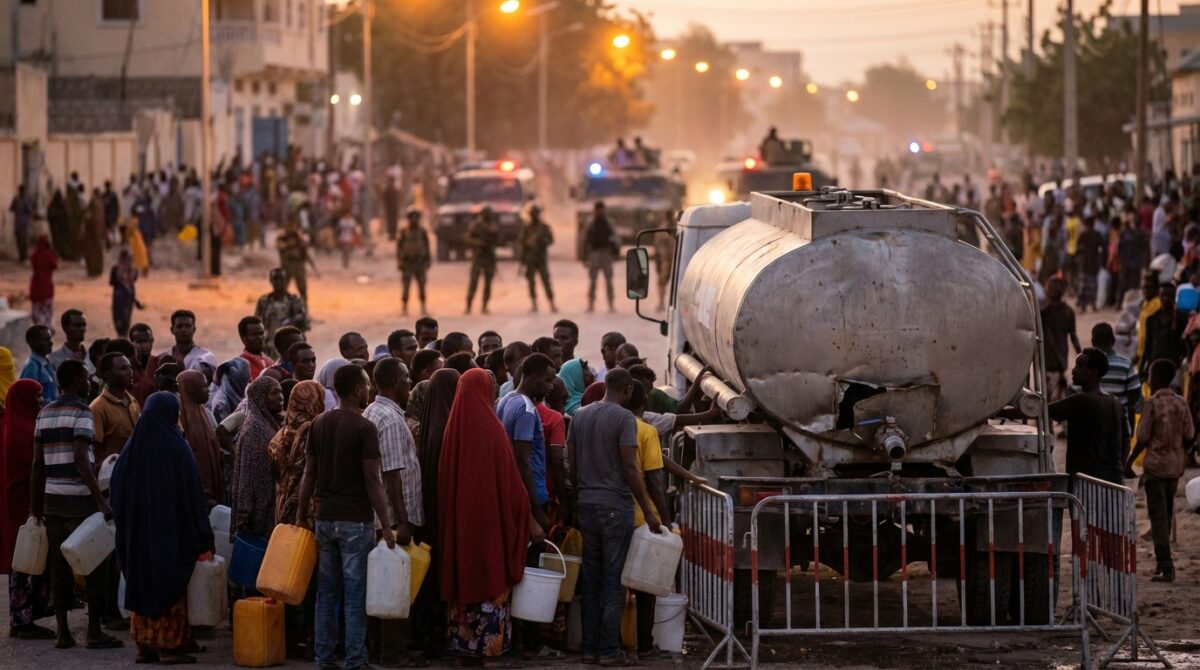
How climate, politics, and infrastructure turn water into a fault line
The forces behind this alarming trend are layered. Researchers such as Dr Peter Gleick, co‑founder of the Pacific Institute, describe most incidents as “multicausal”. Rising temperatures intensify droughts and floods, shrinking or destabilising supplies. At the same time, state failure, corruption, and poor infrastructure leave many communities without reliable access, turning every dry season into a potential resource dispute.
The institute’s work, echoed in analyses like global updates on record violence over water resources, shows how water scarcity interacts with weak governance. When canals leak, dams are mismanaged, or urban utilities serve some neighbourhoods and ignore others, frustration quickly finds a target. Climate change acts less as a single cause and more as a pressure multiplier on already fragile systems.
From Gaza to the Colorado: where water becomes a weapon
The geography of water-related violence is strikingly diverse. In Gaza, human rights groups and water specialists have documented how Israel’s strikes and restrictions systematically damaged desalination plants, pipes and sewage systems. Wastewater flowed into drinking sources, and people were reportedly attacked while queueing for scarce supplies, turning essential infrastructure into a deliberate target.
In Ukraine, Russian attacks on hydropower dams have demonstrated how large‑scale infrastructure can be used to flood towns, cut electricity, or deprive downstream regions of water. Reports such as recent analyses on record levels of violence over water describe these incidents as part of a broader pattern where water systems are targeted for military gain, magnifying humanitarian impacts far beyond the immediate blast zones.
Local conflicts that reveal global fault lines
Far from front lines, disputes over rivers and canals are simmering. In the western United States, long-standing treaties on the Colorado River and Rio Grande have come under strain as flows decline. Under heightened border politics, protests erupted in northern Mexico over water releases to the US; several people were killed near a dam, illustrating how transboundary agreements can turn deadly when trust erodes.
In Central Asia, tensions between Uzbekistan, Tajikistan and Kyrgyzstan over shared rivers are intensifying as Afghanistan builds the massive Qosh Tepa canal to divert water from the Amu Darya. Observers following the documented surge in water violence warn that such projects could sharply reduce downstream flows, fuelling new resource disputes in a region already vulnerable to heatwaves and glacier melt.
Why global institutions now speak of “water bankruptcy”
International bodies are increasingly blunt. UN University’s Institute for Water, Environment and Health has warned that the planet is sliding into an era of “water bankruptcy”, where legal rights and political promises outrun the actual volume in rivers and aquifers. UN projections suggest that by 2030, global freshwater demand could exceed sustainable supply by around 40%.
UNESCO adds another sobering detail: about 40% of the world’s population lives in river or lake basins shared by more than one country, yet only about one fifth of states have effective, binding cross‑border agreements. Analyses such as new data from the Water Conflict Chronology and investigations of record levels of violence over water stress that gaps in law and cooperation leave millions exposed when rivers run low.
Who is most at risk as the water crisis deepens?
Patterns in the chronology highlight several hotspots. In East Africa and the Sahel, pastoralists and farmers move in search of water as wells dry and rains fail. According to experts from organisations like Oxfam, new arrivals can clash with host communities over access to boreholes and grazing, leading to localised skirmishes that rarely reach headlines but scar entire regions.
Urban poor communities also face heightened risk. When utilities ration supplies or neighbourhoods depend on expensive private tankers, protests can meet heavy-handed policing. Reporting such as recent coverage of the increase in water-related violence shows how gender, class and displacement intersect: women and children often queue for water, making them particularly vulnerable when a peaceful line turns into a flashpoint.
Turning down the temperature: solutions to reduce water-related violence
Despite the stark numbers, researchers insist that water conflicts are not inevitable. Dr Gleick and colleagues argue that societies “can solve their water problems”, from basic human needs to ecosystem health, if they treat water not solely as a commodity but as a shared right and responsibility. The question is whether action will match the speed of the violence increase.
Current work by think tanks and organisations highlighted in analyses like recent Pacific Institute updates and policy briefings on water violence doubling globally points to solutions that blend engineering, diplomacy and community leadership.
What can governments, cities, and citizens do now?
Reducing environmental conflict around water means working on both pipes and politics. The following measures, often tested in drought‑prone regions, are already showing promise and can be scaled up:
- Rebuild and protect infrastructure: Repair leaking networks, invest in decentralised systems like community desalination or rainwater harvesting, and classify water plants as protected civilian assets in conflict zones.
- Negotiate fair transboundary treaties: Update river-sharing agreements to reflect climate realities, include clear drought clauses, and create joint monitoring systems that share data transparently between countries and communities.
- Prioritise the human right to water: Guarantee a minimum daily supply per person, regardless of income or status, before allocating water to large agricultural or industrial users.
- Use nature-based solutions: Restore wetlands and floodplains that store water and reduce flood risks, lowering the likelihood that disasters become triggers for unrest.
- Strengthen local participation: Involve women’s groups, Indigenous leaders and youth in water planning, so that early warnings of tension are heard and addressed before violence erupts.
For readers far from recognized hotspots, engagement still matters. Choices about diet, energy, and voting all influence how heavily societies draw on rivers and aquifers. Every litre saved in a city, every policy that protects an upstream watershed, slightly eases the pressure under which conflicts ignite. The line between stable cooperation and confrontation often lies in these quiet decisions.
What does water-related violence actually mean?
Water-related violence refers to incidents where water is a trigger, a weapon, or a casualty of conflict. This includes fights at wells, attacks on dams or pipelines, and situations where armies or groups deliberately cut off supplies to control populations. The Pacific Institute’s Water Conflict Chronology is a leading database tracking such events over centuries.
Is climate change the main cause of the surge in incidents?
Climate change is a powerful stress multiplier, altering rainfall, shrinking glaciers, and intensifying droughts and floods. However, the surge in incidents also reflects political factors such as weak governance, corruption, unequal access, and inadequate infrastructure. Most experts describe water violence as multicausal, where climate pressure meets social and political fragility.
Which regions face the highest risk of future water conflicts?
Current data highlight several high‑risk areas: parts of the Middle East, the Sahel and East Africa, Central and South Asia, and transboundary basins like the Colorado River system. Regions where rivers cross borders, institutions are weak, and climate impacts are accelerating tend to face the greatest risk of water-related tension and violence.
Can international law reduce conflicts over shared rivers?
Yes, when it is well designed and enforced. Binding treaties that include flexible sharing rules, drought procedures, joint monitoring, and dispute resolution mechanisms can turn potential flashpoints into drivers of cooperation. However, UNESCO notes that only about one fifth of countries in shared basins have such robust agreements, leaving large gaps.
What can individuals do about such a large-scale problem?
Jungle Wildlife Shares a Common Tree as Their Preferred Latrine Spot
How Beavers Transform Rivers into Potent Carbon Capture Ecosystems
Individuals can support policies that prioritise universal access to safe water, reduce personal water footprints through food and energy choices, and back organisations improving services in vulnerable communities. Staying informed through credible sources, sharing evidence-based reporting, and challenging misinformation also help create the political space needed for long-term solutions.