
Show summary Hide summary
- Study on European apples and pesticide cocktails
- How pesticide cocktails reach your fruit bowl
- Who is most exposed and what are the risks?
- What regulators and scientists are debating now
- How you can reduce exposure to pesticide residues
- Practical steps for safer apple consumption
- Are European apples still safe to eat despite pesticide cocktails?
- Does peeling an apple remove all pesticide residues?
- Why are apples treated with so many agricultural chemicals?
- Are PFAS pesticides in apples a long-term concern?
- What policy changes could reduce widespread contamination in fruit?
A child biting into a crisp apple in Paris or Warsaw may also be ingesting a mix of up to seven different pesticides. That quiet, everyday gesture is where a new European study collides with your plate, turning a familiar fruit into a case study in hidden food safety risks.
The new analysis of European apples points to widespread contamination, not from a single rogue chemical, but from layered pesticide cocktails that regulators still assess one by one. This gap between science and policy is now impossible to ignore.
Study on European apples and pesticide cocktails
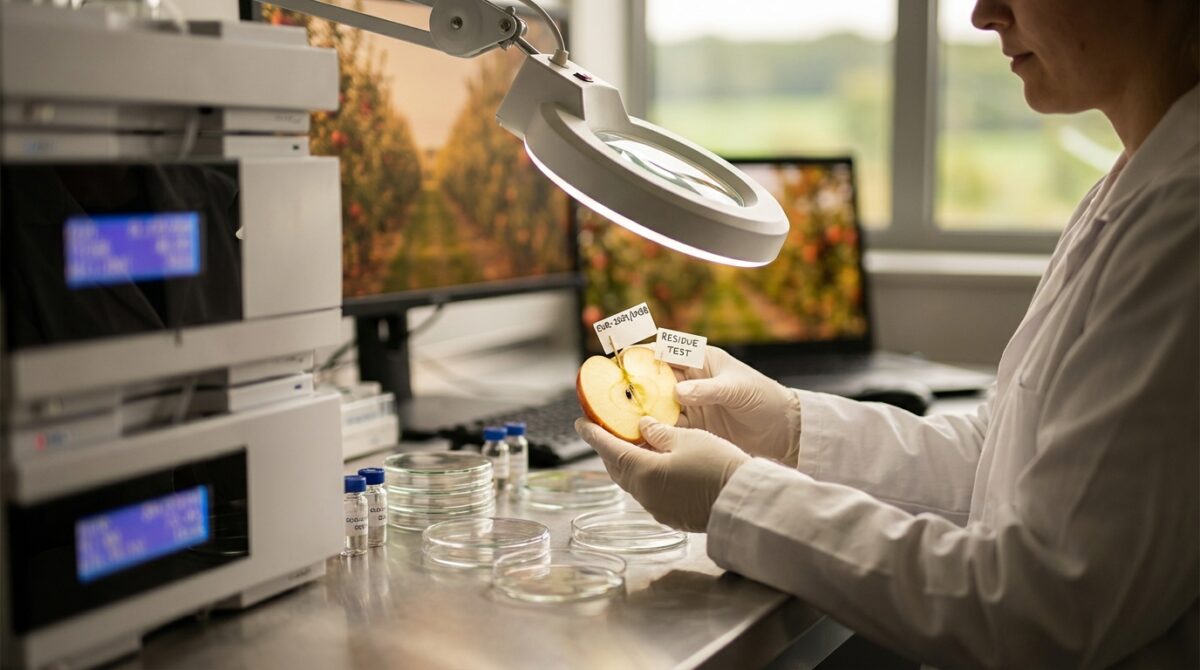
A coalition of NGOs coordinated by PAN Europe commissioned a study on apples bought in 13 countries, from France and Spain to Italy and Poland. Around 60 conventionally grown apples were sent to laboratories for detailed screening of pesticide residues.
How to Create a DIY Worm Farm That Can Compost Food Scraps, Paper, and Even a Whole Kangaroo
How Squid Triumphed Over Earth’s Greatest Extinction to Dominate the Oceans
The results were stark: 85% of the apples carried multiple pesticides, often three to five substances, with some samples containing traces of up to seven agricultural chemicals. Only 7% of conventional apples were free of detectable residues, suggesting that mixing pesticides on fruit is now the norm, not the exception.
Highly toxic pesticides and PFAS in everyday fruit
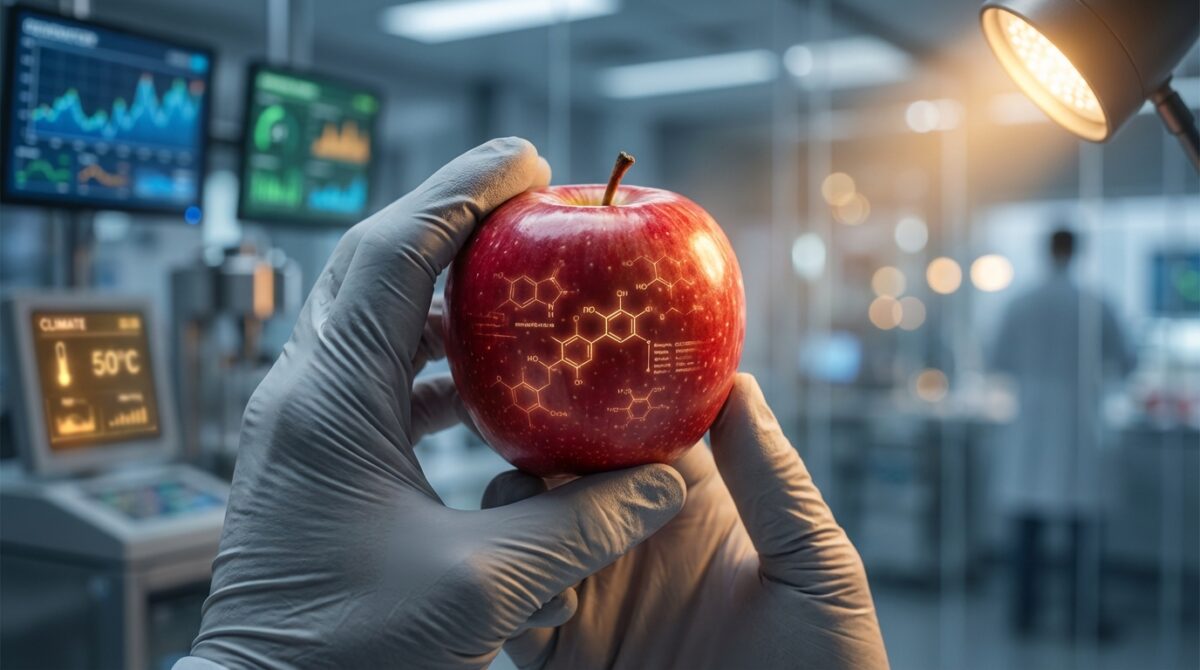
Behind these numbers lies a deeper concern about the type of chemicals involved. In 71% of samples, laboratories found substances listed by the European Union as “candidates for substitution”, the group of pesticides considered among the most hazardous and intended to be phased out when safer options exist.
The analysis also showed that 64% of apples contained at least one PFAS pesticide, part of the so‑called “forever chemicals” family. These molecules, already under scrutiny for water and soil pollution, are extremely persistent and can accumulate in bodies and ecosystems over time, linking fruit contamination directly to the broader environmental impact of intensive farming.
How pesticide cocktails reach your fruit bowl
Apples are among the most intensively treated fruits in European orchards. To protect harvests from apple scab, a fungal disease that scars skins and reduces yields, growers may apply around 35 treatments per season. More than half of these sprays target this single pathogen, layer by layer, from spring blossom to autumn picking.
Each spray can add another trace of agricultural chemicals to the peel and sometimes the flesh. On a farm in northern Italy, for example, a grower battling a wet spring might alternate fungicides, insecticides and growth regulators within weeks. The orchard appears healthy and green, yet the fruit emerging from that landscape may carry a silent, invisible blend of molecules.
From individual pesticides to cocktail effects
European law sets maximum residue levels for each active substance. Regulators such as the European Food Safety Authority (EFSA) test pesticides largely one by one. Toxicologists then estimate safe daily intakes for a single chemical, assuming exposures remain below that threshold.
PAN Europe and allied scientists argue that this approach underestimates the real-world risk of multiple exposure. When five or six pesticides share similar effects on the nervous or hormonal system, their impacts can add up. Research published on platforms such as PubMed-indexed toxicological studies indicates that mixtures can trigger effects at doses where individual substances would appear harmless.
Who is most exposed and what are the risks?
Because apples are eaten raw, often with the peel, the issue cuts across households and habits. School snacks, office lunches and hospital trays rely heavily on this affordable fruit. The public health concern becomes sharper when the data are applied to young children.
According to PAN Europe’s calculations, if the same apples were sold as processed baby food, 93% of the samples would be banned. The residues exceeded the much stricter limits that EU law imposes for products targeting children under three, whose organs and brains are still developing and more sensitive to neurotoxic and endocrine-disrupting chemicals.
Real consequences for ecosystems and climate resilience
Beyond human food safety, the use of these pesticides has a wider environmental impact. PFAS-based products and other persistent compounds do not disappear after harvest. They seep into soils, linger in orchard hedgerows and can wash into rivers after heavy rain.
Pollinators visiting apple blossoms, from honeybees to wild bumblebees, may encounter diluted versions of the same pesticide cocktails. Studies referenced by the European Environment Agency and journals indexed on ScienceDirect link certain fungicides and insecticides to reduced bee navigation, altered reproduction and weakened resilience to heat stress, making orchards less climate-robust in the long run.
What regulators and scientists are debating now
The new findings, detailed in reports such as the PAN Netherlands pesticide cocktail report, have reignited debates in Brussels about how to assess combined exposures. Campaigners argue that the current system underestimates risk when pesticide residues with similar toxic profiles accumulate in a single fruit.
EFSA has begun exploring cumulative assessment groups for pesticides affecting the same organs, yet progress is slow compared with the pace of widespread contamination documented by NGOs and by media investigations such as recent coverage in British environmental outlets. The tension between protecting high yields and reducing toxic loads defines the political landscape.
Farmers caught between market pressure and safer practices
Growers face a difficult equation. Supermarkets demand visually perfect apples, consumers expect low prices, and climate change brings wetter springs or new pests. Many producers feel locked into regular spraying schedules to protect income and meet retailer specifications.
Yet there are alternatives already emerging in orchards from the Netherlands to Austria. Integrated pest management, resistant apple varieties and biodiversity-friendly practices show that reducing agricultural chemicals is possible without abandoning productivity, provided supply chains share the risk and the cost.
How you can reduce exposure to pesticide residues
For households, small daily choices can meaningfully lower contact with pesticide cocktails. PAN Europe recommends several immediate actions that fit into ordinary shopping and cooking routines, without requiring a complete lifestyle overhaul.
These steps do not eliminate all risks linked to fruit contamination, yet they cut the top of the exposure curve, particularly for families with young children and people who eat apples regularly throughout the week.
Practical steps for safer apple consumption
Simple kitchen habits and smart purchasing can reduce both the quantity and diversity of chemicals that reach your plate. These measures are especially relevant for lunch boxes, school canteens and hospital catering where apples are served frequently.
- Choose organic when possible: Certified organic apples generally show far lower levels of synthetic pesticide residues, though they are not automatically residue‑free.
- Peel conventional apples: Removing the skin can significantly reduce residues, since many substances concentrate in or just under the peel.
- Wash thoroughly and rub: Running water and mechanical friction help remove surface deposits, even if they do not touch systemic pesticides inside the flesh.
- Vary your fruit basket: Rotating types and sources of fruit can prevent repeated exposure to the same pesticide cocktails.
- Support short supply chains: Buying from local growers using low-spray or integrated methods encourages farming systems with fewer agricultural chemicals.
Are European apples still safe to eat despite pesticide cocktails?
Regulatory agencies state that individual pesticide residues are generally below legal limits, so apples remain authorised for sale. The concern raised by NGOs and some scientists focuses on the combined effect of several substances in one fruit. Washing, peeling and choosing organic or low-spray apples can significantly reduce exposure, especially for children and people who eat apples very frequently.
Does peeling an apple remove all pesticide residues?
Peeling can remove a substantial share of residues, because many pesticides accumulate in or on the skin. However, systemic pesticides that travel inside plant tissues may still be present in the flesh. Peeling is an effective risk-reduction step, but it does not guarantee a completely pesticide-free apple. Combining peeling with careful washing and varied fruit choices offers better protection.
Why are apples treated with so many agricultural chemicals?
Apples are vulnerable to diseases such as apple scab and to insect attacks, particularly in humid climates. To protect yields and meet cosmetic standards set by retailers, growers often apply around 35 treatments per season. Many sprays are preventive rather than reactive. As a result, multiple pesticides can accumulate on the same fruit, creating the pesticide cocktails highlighted by recent studies.
Are PFAS pesticides in apples a long-term concern?
Jungle Wildlife Shares a Common Tree as Their Preferred Latrine Spot
How Beavers Transform Rivers into Potent Carbon Capture Ecosystems
PFAS compounds are extremely persistent and can build up in the environment and living organisms. Their presence in apples shows how dietary exposure adds to contact via water, packaging and household products. Toxicologists are especially concerned about long-term, low-dose exposure and links to cancer, fertility issues and immune effects. Reducing PFAS use in agriculture is a growing priority for European regulators.
What policy changes could reduce widespread contamination in fruit?
Experts call for stricter cumulative risk assessments, faster phase-out of the most hazardous pesticides and support for farmers adopting low-input or organic systems. Stronger rules for PFAS pesticides and incentives for resistant apple varieties could lower chemical dependence. Public procurement for schools and hospitals can also favour fruit produced with fewer pesticides, shifting markets toward safer practices.