
Show summary Hide summary
- Surfing waves and the hidden physics of climate change
- Vanishing lakes: where water once defined life
- Groundwater, pollution and the invisible crisis beneath our feet
- Visual journey: how images reshape our understanding of water
- From crisis to action: how to live with water again
- Everyday actions that scale up
- How does climate change affect surfing waves on lakes and oceans?
- Why are so many lakes vanishing around the world?
- How does groundwater pollution relate to disappearing lakes?
- What role do cities play in water stress and lake loss?
- What practical steps can individuals take to protect water resources?
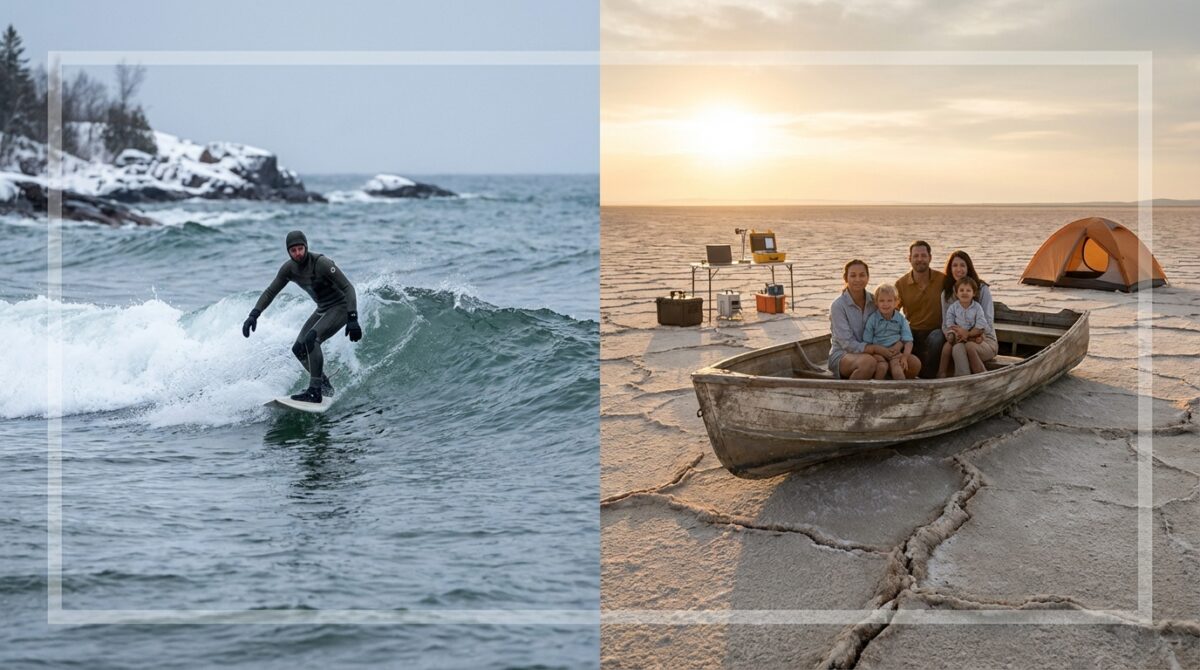
On one shore, a teenager rides winter waves on the Great Lakes. On another, a Bolivian family sits in a boat on cracked salt where Lake Poopó used to shimmer. The contrast between surfing and vanishing lakes shows how quickly Life with water can turn into life without it.
This tension between abundance and loss is becoming a defining story of the Environment. From frozen freshwater swells to disappearing inland seas, every drop is shaped by Climate Change, engineering decisions, and daily habits.
Surfing waves and the hidden physics of climate change
Cold-water surfers on North America’s Great Lakes describe standing in shoulder-high sets while air temperatures sink below zero. According to regional researchers, warming surface waters and changing wind patterns are subtly reshaping these freshwater waves. Articles on winter surfers, such as those documented by Great Lakes surf communities, reveal how storms now arrive in different seasons and intensities.
Facing the Dry Spell: What England Will Experience When the Taps Run Out
Truth Behind the Blind, Slow, and Centuries-Old Greenland Sharks
These changes are not random. The Intergovernmental Panel on Climate Change (IPCC) reports that average global surface temperature has already risen about 1.1°C above pre-industrial levels. Warmer air holds more moisture, feeding storms that can build stronger surf in some regions while leaving others unusually calm.
From joy to risk: when playful water turns dangerous
Surfers still describe the same rush of riding a perfect face, yet the background conditions are shifting. Rapidly changing storm tracks can catch people in the water off guard, and shorter ice seasons alter traditional safety cues along the shore. Studies of water-based recreation, such as the work discussed in Living with water, show how pleasure and fear can coexist as familiar coastlines become less predictable.
Scholars analysing how to “swim without water” use this image to explore what happens when beloved aquatic spaces shrink, close, or transform. The emotional connection to surfing or swimming becomes an early warning system for wider change in local Nature.
Vanishing lakes: where water once defined life
While some shorelines see bigger storms, others simply retreat. Satellite-based documentaries such as The World’s Vanishing Lakes and Rivers track shrinking water bodies from Central Asia to North America. The Dead Sea, parts of the Aral Sea, and many smaller lakes have lost more than half their volume within decades, driven by irrigation withdrawals and hotter, drier air.
One highly visible example is Bolivia’s Lake Poopó. Once the country’s second largest lake, it largely dried into a salt flat during the last decade, as reported in features like A World of Vanishing Lakes. Average regional temperature rose by about 1–1.5°C, while upstream rivers were diverted for mines and farms. Evaporation exceeded inflow, and the lake simply could not recover.
Urban lakes lost under concrete and pollution
Not all disappearing lakes are remote. Phnom Penh in Cambodia has lost many urban water bodies to rapid infill and real estate projects, as explored in analyses of the vanishing lakes of Phnom Penh. Wetlands that once buffered floods and filtered pollutants are now covered by concrete, forcing stormwater into overloaded drains and nearby rivers.
Similar patterns appear in fast-growing cities worldwide. As documented in reports on the world’s largest cities facing water stress, sealing off catchments with asphalt and buildings intensifies both droughts and flash floods. When rainfall has nowhere to soak in, the urban memory of water fades until only disaster brings it back.
Groundwater, pollution and the invisible crisis beneath our feet
Even where Water appears plentiful on the surface, the underground story can be alarming. Case studies on rainwater harvesting and aquifer recharge show how many lakes that once refilled groundwater now leak contamination instead. Nitrates, chromium, lead, manganese and other heavy metals percolate down, turning wells undrinkable.
Such pollution travels silently. According to hydrologists, contaminants can move kilometres through aquifers over years, then appear suddenly in household taps. Combined with climate-driven droughts, this hidden degradation helps explain warnings about a potential global “water bankruptcy” if extraction and contamination continue unchecked.
Climate change accelerates the drying of soil and aquifers
Rising temperatures speed up evaporation from both soils and reservoirs. Mountain regions, for example, are now heating at unprecedented rates, as documented in assessments of global mountain warming. Glaciers and snowpacks that once banked water for summer release are shrinking, leaving lowland communities more exposed to seasonal shortages.
When less meltwater arrives, farmers and cities pump more from groundwater. This overuse compresses aquifers, leads to land subsidence and lowers water tables, making every future heatwave more disruptive. The cause-and-effect loop is clear: hotter air, less surface storage, more pumping, and deeper long-term deficits.
Visual journey: how images reshape our understanding of water
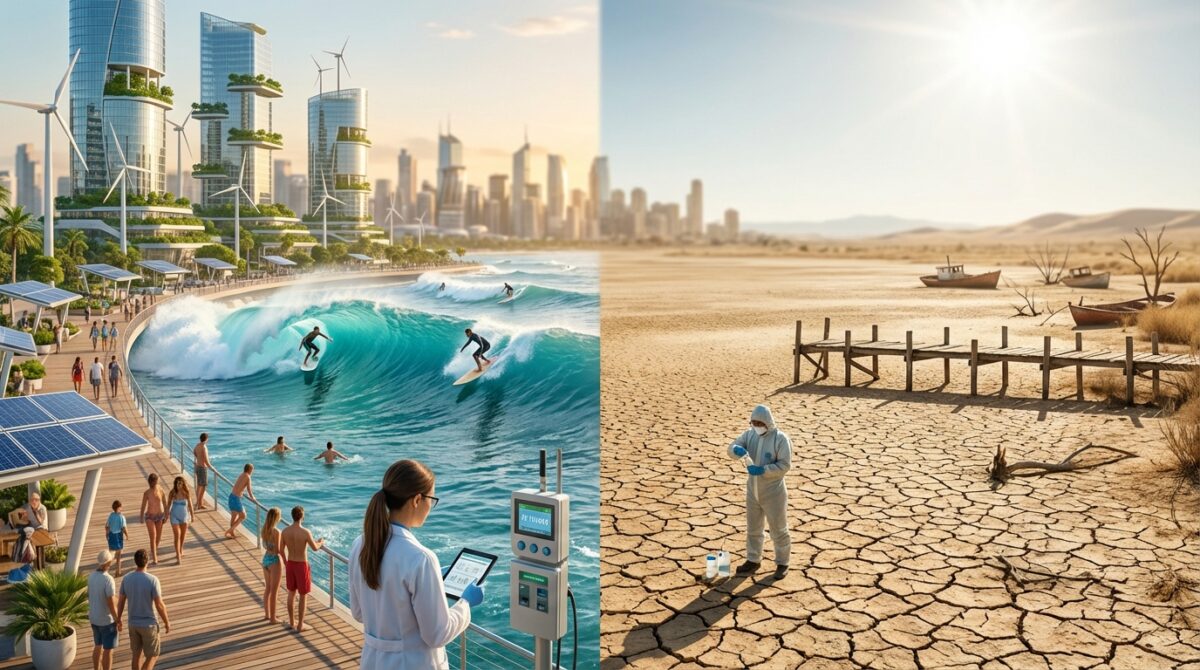
Photography has become one of the clearest ways to grasp these shifts. The global Walk of Water contest, highlighted in galleries such as Life with and without water and coverage from international environment desks, juxtaposes surfers, fishers, and families beside drained basins and flooded homes.
These images turn statistics into stories. A surfboard resting on parched mud says as much about Climate Change as a chart. They echo other visual narratives about how cities, forests and oceans may evolve, including forecasts for future cities and reports on how ecosystem disruption shifts disease risks.
People on the frontlines: surfers, fishers and city dwellers
Across this Visual Journey, one thread is constant: humans adapt in real time. Freshwater surfers share stories in projects like Waves of Inspiration, where athletes move between Great Lakes storms and Nicaraguan coasts, witnessing different phases of the global water cycle.
Fishers on inland lakes change their livelihoods as water recedes. Residents in megacities under water stress experiment with rooftop gardens and low-flow fixtures. Their experiences turn abstract curves on climate graphs into lived daily choices.
From crisis to action: how to live with water again
Solutions already exist and are being tested. Urban planners, for example, are revisiting traditional ideas of wetlands and ponds as living infrastructure. Rain gardens, permeable pavements and restored lakes help recharge groundwater while easing flood peaks. These ideas sit alongside broader strategies for strengthening utility resilience and redesigning neighbourhoods to work with water, not against it.
Nature-based restoration is also advancing. Research on soil processes that double forest regrowth shows how healthy catchments store more moisture and moderate river flows. Protecting upstream forests, wetlands and peatlands becomes a practical tool for stabilising both floods and droughts downstream.
Everyday actions that scale up
Individual choices cannot replace policy, but they shape demand and signal priorities. Practical steps include:
- Reducing domestic water use through efficient fixtures, leak repairs and greywater reuse.
- Supporting urban green and blue spaces by backing local wetland, riverbank and lake restoration projects.
- Choosing lower-impact energy and transport, which cuts emissions and eases pressure on water-intensive fuel systems.
- Engaging with local planning to oppose destructive lake infill and promote rainwater harvesting.
- Sharing stories and images of local Environment change to keep water issues visible.
These actions, multiplied across cities and coastlines, help shift the trajectory from scarcity to stewardship. The same creativity seen in surfing culture, smart-city design and ecological research can guide societies toward a future where Life with water remains possible, even under a changing climate.
How does climate change affect surfing waves on lakes and oceans?
Rising temperatures alter wind patterns, storm tracks and ice cover. On large lakes, shorter ice seasons and shifting storms can change when and where waves form, sometimes creating stronger winter swells and calmer summers. On coasts, sea-level rise and more intense storms reshape beaches, sandbars and rip currents, modifying wave quality and safety conditions for surfers.
Why are so many lakes vanishing around the world?
Many lakes are shrinking due to a combination of climate-driven evaporation and human water use. Hotter air removes more moisture from open surfaces, while rivers that once fed lakes are diverted for irrigation, mining and cities. In urban areas, lakes are also filled for development or cut off from their natural catchments. Without enough inflow, evaporation and withdrawals eventually overpower natural recharge.
How does groundwater pollution relate to disappearing lakes?
When lakes and wetlands lose water, pollutants such as nitrates and heavy metals can become more concentrated in sediments. These substances may then seep into underlying aquifers. At the same time, drought and lake loss push communities to pump more groundwater, drawing contaminated water into supply wells. Thus, vanishing lakes and groundwater pollution often reinforce each other, threatening drinking water security.
What role do cities play in water stress and lake loss?
Surge in Water-Related Violence Observed Since 2022: An Alarming Trend
Legal Battles Erupt Over EPA’s Rollback of Coal Plant Water Pollution Regulations
Rapid urbanisation often replaces wetlands and ponds with concrete and asphalt. Rainwater then rushes into drains instead of soaking into the ground, reducing aquifer recharge and increasing flood risk. Cities also demand large volumes of water for households, industry and power, which may be taken from nearby rivers and lakes. Poor planning can therefore intensify both local flooding and regional drought.
What practical steps can individuals take to protect water resources?
People can reduce water use at home, support wetland and river restoration projects, and participate in local planning decisions about lakes and drainage. Choosing climate-friendly energy and transport lowers pressure on water-intensive fuel systems. Sharing trustworthy information and local stories about water change also helps build public support for policies that protect rivers, lakes and aquifers.