Show summary Hide summary
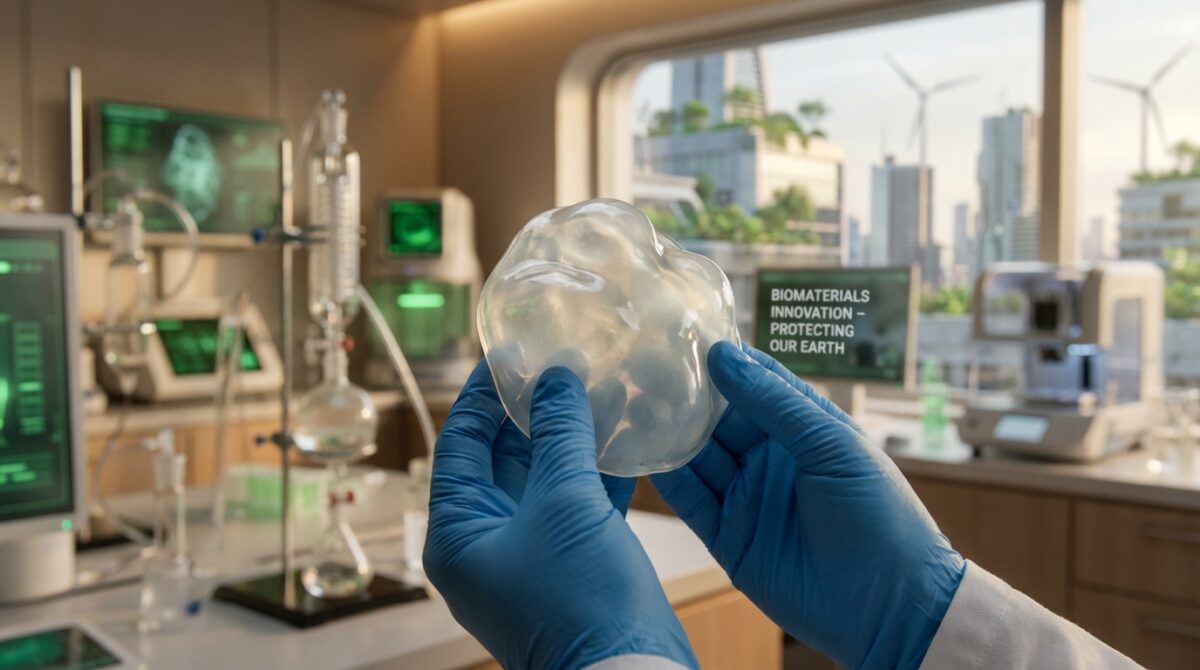
Imagine opening a pack of cookies, throwing it in the compost… and seeing no trace of it after three months. This scenario is no longer science fiction: an innovative plastic milk-based developed by researchers disappears in just 13 weeks in soil.
At the heart of this project, a team at Flinders University, South Australia, wants to transform single-use plastics. Their goal: to provide a biodegradable, eco-friendly material that is efficient enough to replace food packaging that is overwhelming the environment.
A milk-based plastic that breaks down in 13 weeks
The scientists have developed a thin, flexible film using calcium caseinate, a commercial form of casein, the main protein in milk. By combining this milk-based base with modified starch, a bentonite nanoclay, and additives such as glycerol and polyvinyl alcohol, they obtain an innovative plastic that mimics the properties of conventional synthetic films.
Ancient Peruvian Civilization: The Guano Advantage
Approaching Point Return: Earth’s Imminent Climate Risk
Instead of lingering for decades, this material gradually disintegrates under standard soil conditions. Laboratory tests estimate a complete decomposition in about 13 weeks. In other words, packaging thrown into the ground in spring would have disappeared before the end of summer—without leaving a layer of microplastics behind.
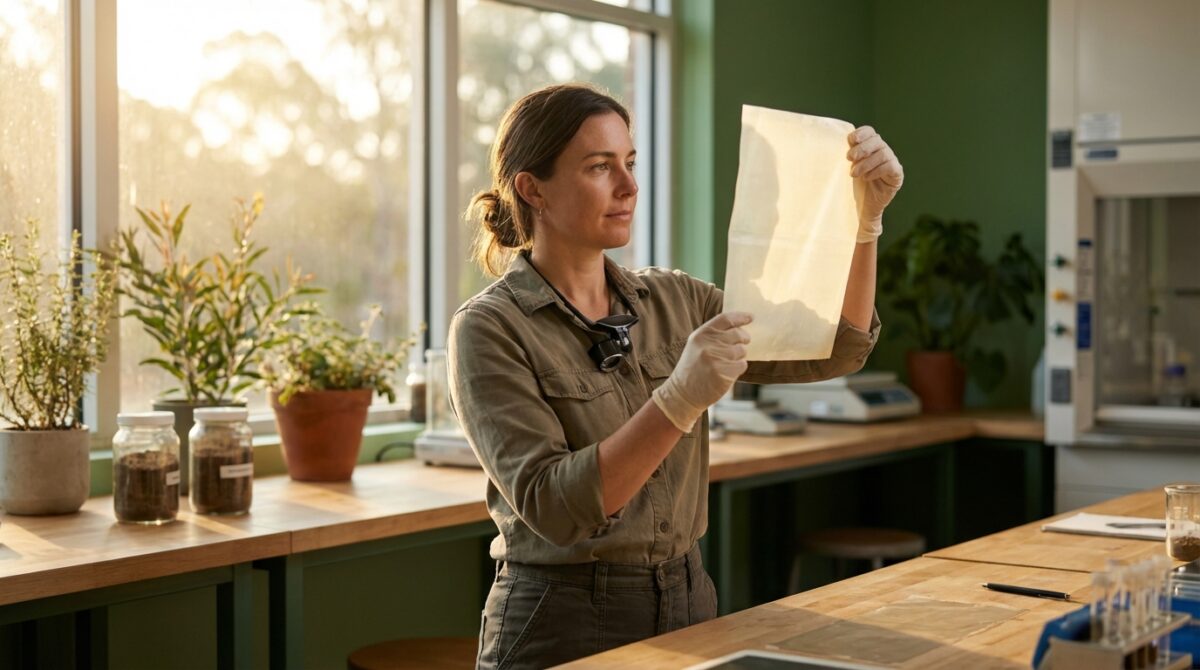
A compostable film designed for food packaging
This experimental film was developed with a very specific goal: to become a compostable solution for the food industry. The researchers focused on flexibility, mechanical strength, and gas barrier properties in order to approach the performance of petro-based plastics used to wrap cookies, snacks, or dairy products.
Microbiological tests show levels of bacterial colonies that meet the accepted limits for non-antimicrobial biodegradable films. However, the authors suggest further antibacterial testing before large-scale use. This scientific caution paves the way for credible and secure industrial adoption.
Why replacing conventional plastic is urgent
To grasp the scale of the problem, just look at the numbers. Global plastic production grew from 2 million tons in 1950 to nearly 475 million tons in 2022—the equivalent weight of about 250 million cars. According to the OECD, without any major changes, production could jump by 70% from 2020 to 2040, surpassing 700 million tons per year.
The majority of this volume comes from single-use products. An analysis published in Nature estimates that about 60% of plastics are discarded after a single use, while barely 10% are recycled. The rest ends up in landfills, the oceans, or breaks down into microplastics that contaminate soil, water, and the food chain.
Toxic additives and the impact on human health
Behind every colorful wrapper lies complex chemistry: several thousand additives, pigments, and flame retardants are found in petrochemical polymers. Some compounds are suspected of being carcinogenic or endocrine disruptors. This health concern is adding pressure on industry to switch to more sustainable materials.
In this context, an eco-friendly film made from a renewable resource like milk protein offers an alternative path. It’s no longer just about reducing waste, but also about limiting daily exposure to controversial substances found in many food packages.
International collaboration for a sustainable plastic
The project extends beyond Australia. Chemical engineers in Colombia, from Universidad de Bogotá Jorge Tadeo Lozano, played a key role, especially in the Nanobioengineering Research Group. By working on nanofibers from caseinates, they discovered that this material could also be molded into polymers similar to conventional packaging plastics.
Building on this, the team strove to improve the mechanical properties and barrier performance of the material. Using starch from renewable resources and nanoclays such as bentonite, they managed to boost strength and resistance to gas and moisture diffusion, all while retaining a biodegradable profile.
Low-cost, environmentally friendly ingredients
For a food brand like the fictitious “GreenBite,” cost remains a key factor. The researchers therefore chose inexpensive and easily accessible components: dairy proteins, starch, natural clay, common plasticizers. This choice opens up the way to mass production of this innovative plastic without causing a price surge for end users.
The stated aim is clear: to offer an eco-friendly alternative able to fit into a circular economy, where packaging becomes a resource for the soil instead of lingering as persistent pollution. Such an approach could become a strong marketing point for brands looking to align their image with sustainable values.
How this compostable plastic could change your daily life
To gauge its potential impact, imagine a week’s grocery shopping for an urban family: cereal bags, cheese packs, fruit trays, protective wraps. If most of these containers switched to a compostable milk-based material, the amount of residual waste would drop dramatically.
In a household or industrial compost bin, these films would break down in just a few weeks, joining the organic matter instead of ending up in garbage bags. Municipalities would gain better control over waste volumes, and consumers could feel real satisfaction in seeing their sorting efforts lead to true decomposition.
- Reduced household waste: fewer trash bags, less volume sent to landfill.
- Stronger brand image for companies adopting sustainable solutions.
- Lower carbon footprint linked to the production and transport of fossil plastics.
- Environmental protection by limiting microplastic buildup in soil and oceans.
- Shift towards renewable resources at the core of the packaging chain.
For fast-food or retail players, this type of milk-based film could be a concrete way to join the “circular economy revolution” highlighted by the researchers, connecting industry, consumers, and the environment.
What is this milk-based plastic made of?
This material primarily uses calcium caseinate, derived from milk casein. Researchers add modified starch, bentonite nanoclay, glycerol, and polyvinyl alcohol to produce a flexible, sturdy film suitable for food packaging—all while remaining biodegradable and eco-friendly.
Does this milk-based plastic really decompose in 13 weeks?
Lab tests show progressive decomposition under standard soil conditions, with complete disappearance estimated at around 13 weeks. The exact timeline may vary depending on temperature, humidity, and microbial activity, but the material is designed to break down much faster than conventional plastic.
Is it already usable for food packaging?
Early tests indicate good suitability for food packaging, but researchers recommend further antibacterial testing. Before large-scale commercialization, regulatory and industrial validations will have to confirm the film’s safety and performance under real-life conditions.
Is this biodegradable plastic compostable at home?
The material breaks down in soil, suggesting interesting potential for home composting. However, testing was done in controlled conditions. Further studies are needed to clarify the optimal composting conditions, especially timeframe and fragment size once the film breaks up.
How is it more sustainable than traditional plastic?
Catch Bird New App Transforms Birdwatching Adventures
Did a Cloud-Seeding Startup Truly Boost Snowfall in Utah?
This film is based on renewable ingredients like milk protein and starch, and it breaks down much more quickly than fossil plastics. It reduces the amount of persistent waste, lowers risk from toxic additives, and fits more easily into a circular economy approach geared toward environmental protection.