

Show summary Hide summary
- Environmental footprint: why milk choices matter for climate impact
- Water usage: oats shine, almonds struggle
- Land use, fertiliser and biodiversity: beyond CO2 and water
- Processing, packaging and how to build a balanced milk portfolio
- Practical tips: choosing your milk by impact and purpose
- Which milk has the lowest overall environmental footprint?
- Is almond milk really bad for water usage?
- Does local dairy milk beat imported plant-based milk?
- How can I reduce milk-related emissions without giving up dairy?
- Are all plant-based milks equally sustainable?
Opening your fridge has become a climate choice. Between dairy milk, oat lattes and almond caps, your daily splash can double or halve your environmental footprint without you even noticing. So which carton actually lines up with your views on sustainability?
Australian households now juggle several milk types at once. Dairy still dominates, yet almost half of shoppers buy some form of plant-based alternatives. Behind this quiet revolution sits a tougher question: how do carbon emissions, water usage, land use and overall resource consumption compare for cow’s milk, soy, oat and almond?
Environmental footprint: why milk choices matter for climate impact
For Alex, a parent in Melbourne, milk is no longer just about taste or price. Choosing between dairy and plant-based cartons has become part of their personal response to greenhouse gases and climate impact. That mindset is spreading fast as food systems come under scrutiny.
Ocean alkalinity enhancement: Boosting carbon storage in the sea
Rediscovery of the Large Tortoiseshell Butterfly: Species No Longer Extinct in the UK
Life-cycle assessments now track milk “from farm to fork”, looking at feed, fertiliser, processing, packaging and transport. Work such as global impact comparisons of milks shows how each litre carries a different climate cost. For anyone already questioning meat’s impact, as seen in debates on rethinking meat consumption, milk is simply the next frontier.
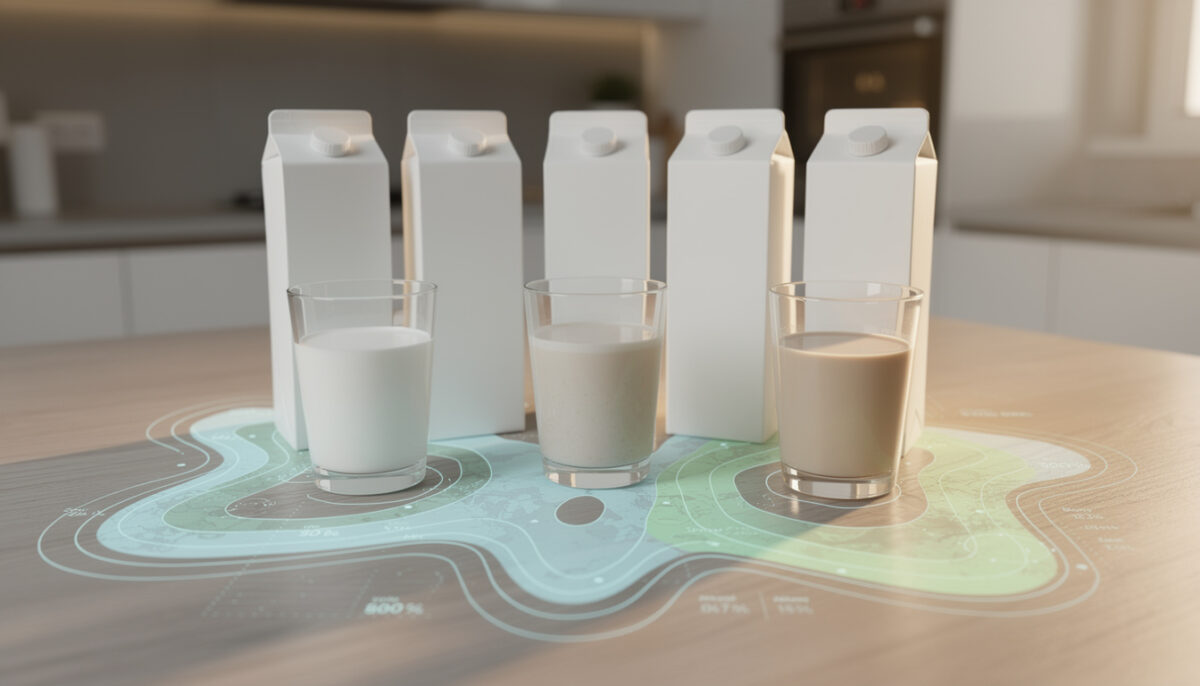
Carbon emissions: dairy milk versus plant-based alternatives
On pure carbon emissions, cow’s milk loses. Cows produce methane as they digest feed, and that gas traps far more heat than CO2 over 20 years. In Australia, digestion from cattle and other ruminants contributes a significant slice of national greenhouse gases.
Per cup, research summarised by the World Resources Institute reports roughly 330g CO2-e for dairy milk, versus 122g for soy, 102g for oat and 98g for almond. A more recent “farm to fork” update from ecoSwitch data scores dairy around 85/100 on a planetary health scale, while soy milk reaches 96/100. Analyses like the World Resources Institute overview of milks’ environmental impact reach the same verdict: plant-based alternatives almost always mean lower emissions.
Water usage: oats shine, almonds struggle
Once emissions are under control, attention often shifts to water usage, especially as the world edges toward what some experts call a potential global water bankruptcy. Here, not all plant drinks look as green as their branding suggests.
Oats perform strongly because they are typically grown as dryland crops in rain-fed regions. That means little or no irrigation, so every litre of oat milk tends to draw less from stressed rivers and aquifers. The context of local water scarcity matters more than raw litres used, but oats usually remain the most frugal choice.
Almonds and dairy: the hidden water trade-offs
Almond trees prefer hot, relatively dry climates where rainfall is unreliable. Farmers compensate with heavy irrigation, pushing almond milk to the top of the chart for water usage. Where irrigation competes with ecosystems or human needs, that footprint bites even harder.
Dairy and soy sit somewhere in the middle. Pasture-based dairy in wet regions can look fairly moderate on water, while irrigated dairy in dry zones looks far worse. Soy milk’s profile varies too, yet many studies, including recent assessments of dairy and plant-based milks, still place it below dairy for combined climate and water impacts. For Alex, oats now power their weekday coffee, while dairy stays on the table for family breakfasts.
Land use, fertiliser and biodiversity: beyond CO2 and water
Land use turns milk into a question of forests, wildlife and long-term sustainability. Cow’s milk demands pasture plus cropland for feed. That combination means more hectares per litre compared with soy or oats, limiting space for reforestation and natural habitats.
Several studies suggest that shifting even part of current dairy demand towards plant-based alternatives could free up large areas for carbon-storing vegetation. This mirrors debates in other sectors, from contested windfarms to renewable projects in iconic landscapes, where land decisions reshape climate futures.
Fertiliser use and soil impacts across milk types
Fertiliser brings another layer of resource consumption. Nitrogen and phosphorus boost yields but drive emissions and water pollution if overused. On Victorian dairy farms, fertiliser application has recently dropped from about 250kg to under 200kg per milking hectare, yet remains higher than many cereal systems.
Soy holds an advantage because it is a legume that fixes nitrogen in the soil, cutting synthetic fertiliser needs. Oats generally require 40–80kg of nitrogen per hectare, while dairy systems can exceed 140kg. Almond orchards, especially high-yield ones, demand relatively hungry nutrient regimes. For soil health and input bills, Alex’s long-life soy cartons quietly look pretty smart.
Processing, packaging and how to build a balanced milk portfolio
Plant drinks do not flow straight from the field. Unlike cow’s milk, which is mainly cooled and pasteurised, soy, oat and almond beverages need soaking, grinding, heating and fortification with calcium or vitamins. Some analyses estimate processing and packaging can represent close to three quarters of a plant milk’s total environmental footprint.
Yet when all phases are tallied, plant milks still average around 1kg CO2 per litre, versus roughly 3kg for animal-based milk. Glass bottles, cartons and plastic all come with trade-offs, but packaging rarely overturns the core pattern: the biggest climate differences lie on farms, not in factories.
Practical tips: choosing your milk by impact and purpose
Alex ended up treating milk like a diversified “impact portfolio” instead of hunting a single perfect option. You can do the same by matching each product to its strongest area while keeping nutrition in mind.
- For lowest carbon emissions: favour soy or oat for daily coffees and smoothies.
- For careful water usage: pick oat first, then soy or local dairy from wetter regions.
- For land use and biodiversity: lean towards plant options that avoid deforestation and support regenerative farming.
- For family nutrition: include some dairy or fortified soy, especially for children, after checking labels.
- For overall sustainability: rotate between two or three milks to spread impacts and reduce pressure on any single crop.
Research such as the life-cycle studies in comparative assessments of dairy and plant-based milks shows no absolute winner. A small mix-and-match strategy can meaningfully cut emissions while still fitting your routine.
Which milk has the lowest overall environmental footprint?
Across most current studies, plant-based alternatives such as soy and oat milk have a lower overall environmental footprint than dairy milk. They generally emit less greenhouse gases, use less land and often require fewer fertilisers. Oat tends to perform especially well on water usage, while soy balances low emissions with good protein content.
Is almond milk really bad for water usage?
Almond milk typically has a higher water footprint because almonds are grown in warm, dry regions that rely heavily on irrigation. Where water is scarce, this can put strong pressure on rivers and groundwater. In wetter regions or well-managed orchards, the impact is lower, but oat or soy milk usually remain better choices for water efficiency.
Does local dairy milk beat imported plant-based milk?
Transport usually represents a small share of the total climate impact of milk. Most emissions come from farming. Local dairy can reduce food miles, yet its methane and land use remain high compared with plant-based options. A nearby soy or oat drink can offer the best of both worlds: lower production footprint and shorter supply chains.
How can I reduce milk-related emissions without giving up dairy?
Love and Survival Beneath the Waves: How a Daring Marine Lab Rescued a Sea Snail from Extinction
Study Reveals Humanity is Accelerating Earth’s Warming at Unprecedented Rates
You can cut climate impact by simply reducing the volume of dairy milk and replacing some with plant-based alternatives. Many people keep dairy for cooking or cereal but switch to soy or oat for coffee. Choosing products from farms improving manure management and feed efficiency also lowers emissions compared with conventional dairy.
Are all plant-based milks equally sustainable?
No. Different crops perform better or worse on specific indicators. Soy and oats tend to score well across carbon emissions, land use and fertiliser needs. Almond milk scores well on greenhouse gases but poorly on water usage in dry regions. Coconut and pea milks have promising profiles yet depend on where and how they are grown, so checking sourcing and certifications remains important.