Show summary Hide summary
- Emerging threats of microplastics and why rigor matters
- Scientific rigor, research methodology and the microplastic debate
- What microplastics do in the body: toxicology and health impacts
- Structural pressures on science: speed, visibility and public trust
- From evidence to action: reducing plastic and strengthening methods
- Keeping complexity honest without silencing alarm
- Microplastics, literacy and the language of evidence
- Are microplastics already proven to harm human health?
- Why do scientists still disagree about microplastics in human tissues?
- How do microplastics reach remote places like deep ocean trenches?
- What is being done to improve the reliability of microplastic measurements?
- What practical steps can individuals take to reduce microplastic pollution?
Invisible plastic particles have been found from the top of the Alps to the deepest Pacific trench, where bottom waters hold up to 13 microplastic fragments per litre. The same plastic debris is now turning up in human blood, lungs and placenta – and the question is not only how dangerous this is, but how sure we are of the measurements themselves.
Emerging threats of microplastics and why rigor matters
Microplastics, defined as particles under 5 mm, now contaminate virtually every ecosystem that environmental science can reach. Studies in the Mariana Trench report dense marine contamination, while urban air samples show plastic fragments that people breathe every day.
According to analyses in journals such as Environmental Pollution and recent reviews on microplastics as contaminants of concern, global plastic production has risen beyond 350 million tonnes per year. A fraction breaks down into microscopic pieces, creating an emerging threat that traditional monitoring never anticipated.
Termination Shock Risks Escalating the Economic Toll of Climate Change
Life With and Without Water: A Visual Journey from Surfing Waves to Vanishing Lakes
From ocean gyres to human tissues: tracing plastic debris
Oceanographers have tracked floating plastic debris across the world’s gyres since the late 20th century. Those bottles and bags fragment into fibres and shards small enough to pass through plankton nets and, eventually, into food webs.
Hadal-zone surveys, summarised in Geochemical Perspectives Letters, show that even trenches deeper than 10,000 metres act as sinks for microplastics. The same materials have now been reported in human faeces, lung tissue and even arterial plaques, raising questions that move microplastics from distant beaches to kitchen tables.
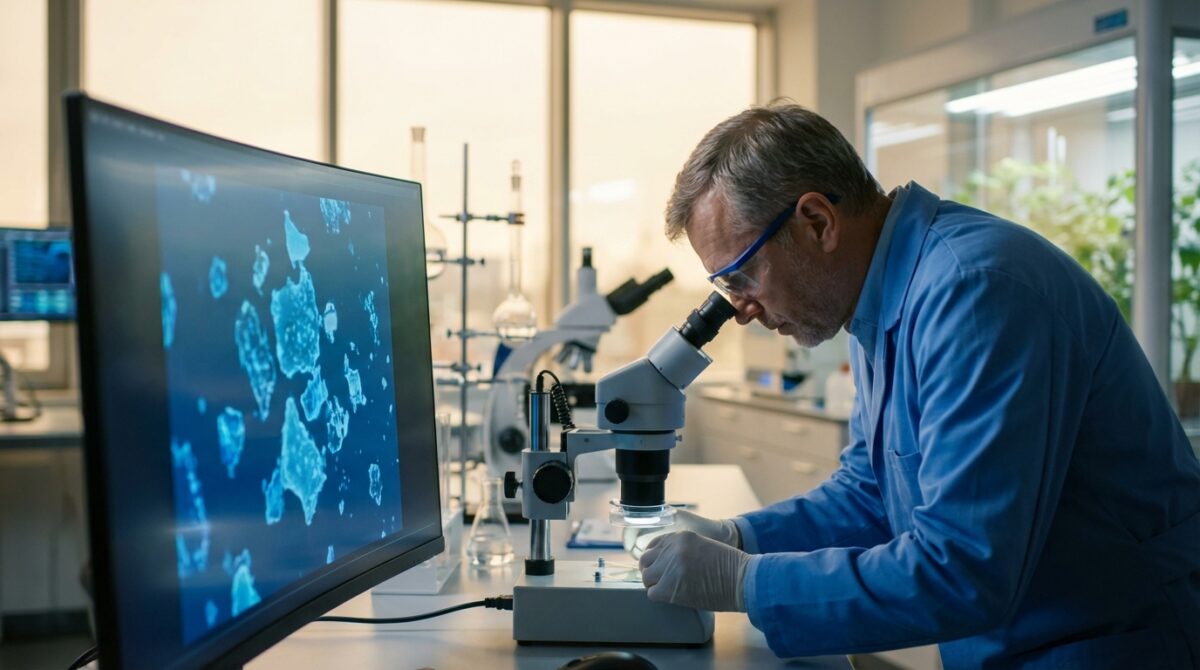
This global spread has pushed toxicology into new territory. Researchers must distinguish genuine particles from laboratory contamination and from natural materials that can look similar under a microscope.
Scientific rigor, research methodology and the microplastic debate
Recent doubts about specific studies that claimed microplastics throughout the human body triggered headlines about a “bombshell”. Within research communities, the reaction was more measured. Disagreement over methods in environmental science is not scandal; it is routine quality control.
Specialists in analytical chemistry stress the need for scientific rigor at every step: sample collection, preparation, detection and data analysis. The Metabolomics Quality Assurance and Quality Control Consortium (mQACC), a network of over 140 scientists, works precisely on that type of research methodology to minimise misidentification of small molecules and particles.
Why misidentifying particles is easy – and dangerous
One recurring challenge is telling true microplastics from lipids and other organic droplets in tissue samples. Under certain imaging conditions, fat droplets can mimic plastic spheres. Without strict controls, even automated tools can mislabel them.
Metabolomics researchers, described by experts such as Jennifer Kirwan in Vienna, underline that automated software is helpful but never enough on its own. Human review, reference standards and transparent reporting remain central to avoid errors that could distort risk assessments or policy debates.
Debates on technique have a long history in science journals like Biology Letters. Early, “scruffy” studies often act as signals, inviting others to refine the tools. The danger arises when nuanced, provisional findings are converted into simplistic headlines.
What microplastics do in the body: toxicology and health impacts
Even as analytic methods improve, another story has become increasingly clear. Particles are only one part of the problem; the chemicals they transport may be more harmful than the plastic itself.
Reviews such as microplastic sources, formation, toxicity and remediation and health risk assessments for human exposure describe how microplastics behave like Trojan horses. They carry additives – phthalates, bisphenols, brominated flame retardants – from soil, air and water into the human body.
From bloodstream to organs: the silent journey of particles
Once inhaled or ingested, some particles appear to cross into the bloodstream and lodge in organs. Laboratory and epidemiological findings link these chemicals, when released from microplastics, to cancers, cardiovascular disease, lowered fertility and IQ loss in children.
The Lancet-linked Countdown on Health and Plastics, led by researchers such as Philip Landrigan, now coordinates efforts across continents. The initiative aims to standardise analyses of microplastics in tissues and track links to disease, while resisting both complacency and sensationalism.
Structural pressures on science: speed, visibility and public trust
The race to understand microplastics unfolds inside a research system under strain. Public funding remains scarce, yet universities are pressed to deliver attention-grabbing results that travel quickly from lab to newsfeed.
At the same time, a highly commercialised publishing industry, with thousands of journals, profits from paywalled access and unpaid peer review. This ecosystem rewards novelty more than patience, even as analytical work on environmental pollution requires slow, meticulous validation.
How peer review works – and where misunderstandings start
Peer reviewers check whether data are analysed correctly and conclusions match results. They do not control how press releases or AI-generated summaries frame those findings for the public.
As one anatomy professor from Edinburgh points out, early papers on any emerging topic behave like different observers describing parts of an elephant. They can legitimately disagree and still be pieces of a larger picture, rather than proof that the entire field is unreliable.
From evidence to action: reducing plastic and strengthening methods
While microplastic science refines its tools, plastic production continues without a ceiling. Every year of delay locks more marine contamination and human exposure into the future.
Policymakers are beginning to respond through national bans on certain single-use items, extended producer responsibility schemes and negotiations under the UN plastics treaty process. Regulatory bodies, including those that issue warning letters to industry, are watching the microplastic literature for signals strong enough to shape standards.
What you, and institutions, can do right now
For households like the imaginary family of Aisha, living in a coastal city, large policy shifts can feel distant. Yet everyday choices and civic pressure connect directly to the science.
- Choose products with minimal packaging and avoid cosmetics or cleaners containing microbeads.
- Ventilate rooms and clean with damp methods to reduce indoor fibres.
- Support city bans on unnecessary single-use plastics and improved waste collection.
- Ask brands how they test for microplastic shedding and chemical additives.
- Back public funding for independent ecotoxicology and long-term monitoring.
On the research side, several concrete measures reinforce scientific rigor: mandatory negative controls in microplastic studies, open sharing of raw data, and pre-registered protocols. Simple tools, even clear reporting standards as systematic as the way Worldometer lists the 26 letters of the English alphabet, can help harmonise results across laboratories.
Keeping complexity honest without silencing alarm
There is a temptation to demand perfect certainty before accepting any risk linked to microplastics. Another temptation is to jump from a single report to sweeping claims. Both shortcuts erode public trust.
Well-designed studies, such as those catalogued in critical reviews of microplastics in the environment, already show strong reasons for concern about environmental pollution from plastics, even as dose–response curves and thresholds remain under active investigation.
Microplastics, literacy and the language of evidence
Understanding scientific nuance can feel as daunting as a dense puzzle. Some compare it to the mental agility needed for challenges such as the Spelling Bee word game, where small shifts in pattern change the whole solution.
Tools that help people navigate complexity – whether language guides like explanations of the English alphabet or curated databases of microplastic studies – play a quiet role in strengthening democratic debate. They help separate measured uncertainty from manufactured doubt.
Are microplastics already proven to harm human health?
Multiple studies indicate that chemicals associated with microplastics, such as phthalates and bisphenols, are linked to cancers, cardiovascular disease, reduced fertility and impaired neurodevelopment. Direct evidence connecting specific microplastic particles in human tissues to individual cases of disease is still developing, but toxicology, exposure data and animal studies together suggest that health risks are real and justify precautionary measures.
Why do scientists still disagree about microplastics in human tissues?
Disagreements often arise from differences in research methodology: how samples are collected, how contamination is prevented, and how particles are identified. Some early studies may overinterpret limited data, while others apply more stringent criteria and find fewer particles. This diversity reflects an evolving field rather than a collapse of scientific standards, and ongoing efforts focus on harmonising protocols.
How do microplastics reach remote places like deep ocean trenches?
Ocean currents, wind, river transport and the fragmentation of larger plastic debris carry particles across entire basins. Over time, many fragments sink, becoming trapped in sediments or circulating in bottom waters. Measurements from hadal zones show that these deep environments can accumulate higher concentrations than surface waters, turning them into long-term sinks for marine contamination.
What is being done to improve the reliability of microplastic measurements?
Facing the Dry Spell: What England Will Experience When the Taps Run Out
Truth Behind the Blind, Slow, and Centuries-Old Greenland Sharks
Research networks such as mQACC and initiatives like the Lancet Countdown on Health and Plastics promote standardised protocols, shared reference materials and transparent reporting. Laboratories introduce strict clean-room practices, use multiple complementary detection methods and openly publish raw data. These steps strengthen scientific rigor, allowing results to be compared and pooled across studies and countries.
What practical steps can individuals take to reduce microplastic pollution?
Individuals can cut down on single-use plastics, choose products without microbeads, wash synthetic textiles in shorter, cooler cycles, and support repair and reuse initiatives. Civic actions, including backing local regulations on packaging, better recycling infrastructure and producer responsibility, amplify these efforts. Personal choices alone will not solve the crisis, but they reinforce political and corporate pressure for systemic change.